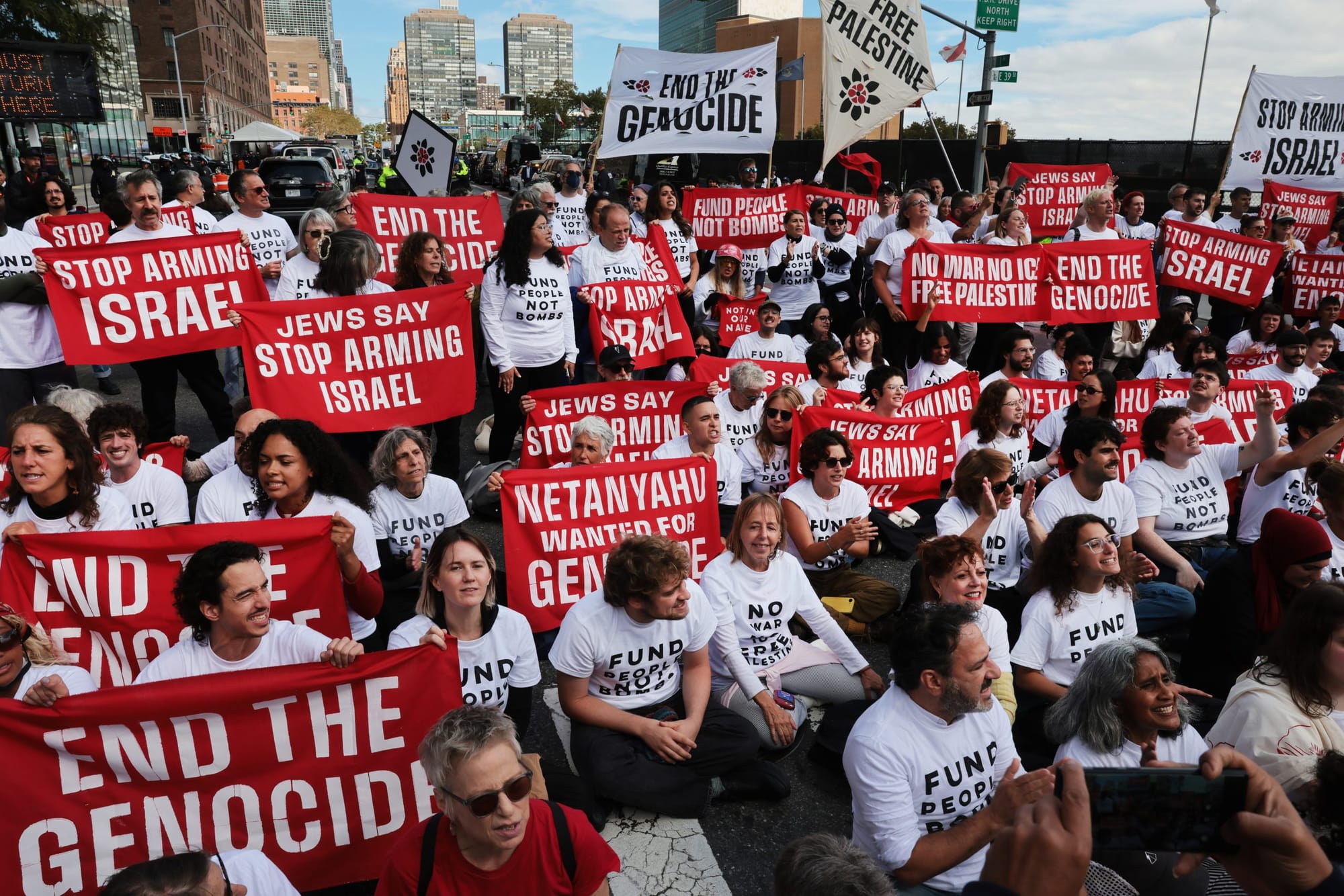
A world without grief
Those who force AI and violence on our countries don’t recognize the beauty of the Earth anymore. They can neither feel the suffering of others, nor can they contemplate grief; they want a world without it
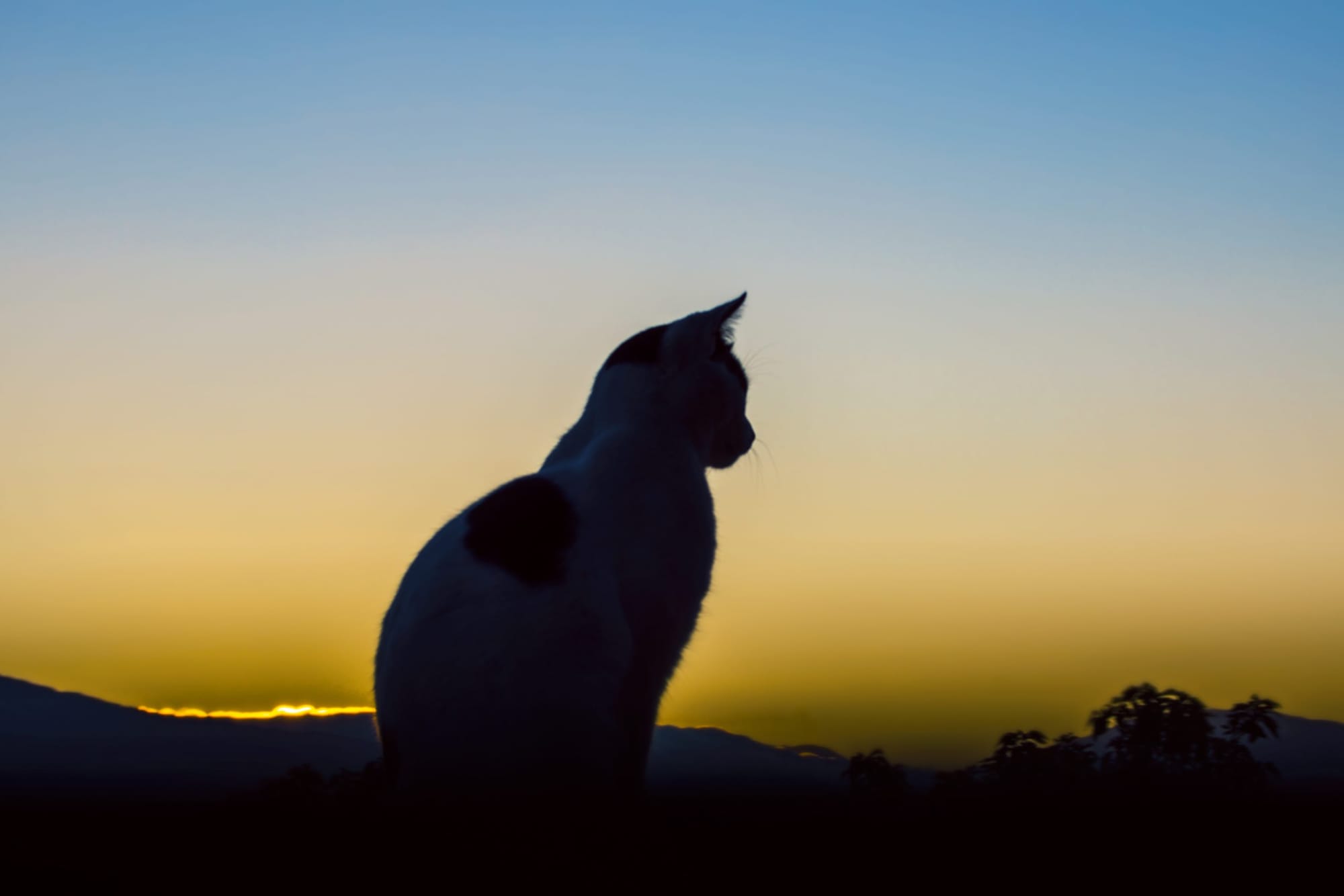

Avik Jain Chatlani
Real journalists wrote and edited this (not AI). Independent, community-driven journalism survives because you back it. Donate to sustain Prism’s mission and the humans behind it.
The night after Mimi died, I woke up startled, afraid that I missed her feeding or medicine time. After a few ugly seconds of realizing she was no longer there, I tried to force myself back to sleep.
After a couple of months of living between illness and recovery, she had a seizure on a Sunday evening, when her veterinarian couldn’t be reached. She slept on me throughout the night until the clinic could be contacted in the morning. The vet and her assistant came on Monday. Laura, who was tending to her mom and sisters abroad after the passing of her grandmother, spoke to Mimi over WhatsApp. Sedated, she listened to Laura, and to me, as the medicine took effect.
I spent the rest of the day in bed, unable to write or read or translate. Mimi, whom Laura had adopted at the age of 10, passed away barely a month after her 15th birthday. During those years, I had scarcely done any work without her by my side. There was no energy now, no will, to bother continuing. But late that night, as a terrible day came to an end, I got up. I had no appetite, but a hunger headache wouldn’t go away. There was nothing in the fridge. I washed my face, put on a jacket, and left the apartment.
I stopped by a sandwich place, where the man working greeted me politely, sensing that I didn’t have the energy to speak. I then went to a gas station to grab some bottled water and an Inka Cola. The girls working there, mostly students, recognized me. I go to this gas station often, whenever we’re missing something. They asked me what was wrong. I told them that our cat passed away, and as they reacted with the appropriate sounds that one makes upon being told this kind of news, I quickly lied and said that I was OK; that everything was OK; that she was suffering; that she was in a better place now. I said goodnight, trying to smile so they didn’t feel bad for asking, and walked home as quickly as possible to eat, cry, and sleep.
It’s a natural reaction, when you lose a pet, to not want to burden others with your loss, especially those who you don’t know well. There is the fear that weeping about a dead cat or dog will offend someone who has lost their parent, lost their sibling, lost their child.
Not everybody understands this kind of grief. Amid all the horrors that happen to human beings and animals every day, the luxury of being able to say goodbye to your senior cat at home—giving her a beautiful view and comfort medicine—doesn’t feel adequately gutting.
But for me, it was life-changing. Weeks earlier, when Laura called me, sobbing, to tell me that her grandmother died—Teta Nawal, the center of the family, who I first met just six months prior—I yelled out in shock, and it was Mimi who heard me. It was she who lingered at my feet as I made calls, typed out messages. And in the years preceding this family tragedy, as we received news of murdered students and readers and fellow writers in Gaza, as we wrote and published whatever we could in futile moments, it was our calico cat who absorbed all of our stress. It was she who slept on our papers, in our suitcases, on our clothes.
When things became difficult, she got half-a-dozen shots and flew away with us, to a safer country, where she would spend the last days of her life.
I think she was happy here.
An escape into the present
I spend a good part of my days in the company of the dead. When you work in the field of history—when you write works about remembering, correcting, and translating snippets of events from the past—you live with ghosts, with spirits. With the ancestors. Unlike other fields that look toward the future, toward progress, memory and storytelling are constantly moving in the opposite direction. And there’s a melancholy, a loneliness that can fill your days, your dreams.
For years, playing with Mimi on the floor of our studio, or getting up to mix her food, fill her water bowl, clean her litterbox, brush her fur, these were little moments that offered the ability to be completely and happily immersed in the present. And when she had to go to the vet, or when she needed a groom, the suffering of the world that the modern age has connected us to—the ability to see and hear those who are being killed by the governments and companies that rule over us—would suddenly disappear from my mind. All of my concern and alertness would instantly be diverted to this little cat, who would meow for our attention when she was hungry, who would fall asleep on us and purr when our chests were pounding with grief.
I was able to say goodbye to our cat in the most comfortable of circumstances, without her having to pass away in a vet’s office, because of my access to resources—resources that the man selling me food or the girls bagging my drinks don’t have. I mourned in an apartment that’s more spacious than anything we ever had in the United States, with enough friends at the newspaper to let me take some time off. My ability to grieve, fully, for as long as I wanted, as selfishly as I wanted, with the rent paid, was a privilege. A privilege that so many people on this Earth don’t have.
One of the greatest inequalities is that we aren’t all able to take the time and space to mourn.
Public displays of grief
On my runs, I pass by the medical college, housed in a sprawling yellow mansion: Membership is a requirement for all doctors and surgeons who wish to practice within the territory. And, pinned to the iron gates, there are 551 black-and-white posters. Each has the name, photograph, practice, birthday, and death date of a doctor or surgeon who died during the COVID-19 pandemic, which killed over 220,000 Peruvians and devastated the health care sector.
Tourists and newcomers to the neighborhood often slow down at the sight of the display, lingering for a few seconds before sadly coming to realize what it’s about. But for those of us who pass by on an almost daily basis, oftentimes huffing and puffing, those photographs are merely part of the route. It’s troubling how they became so routine, marking the passage of a certain mile.
Such a public display—no matter how well-intentioned—is, perhaps, unnatural. Grief is deeply personal. When you’re mourning, contemplation is difficult in the middle of a busy day. It’s hard to give of yourself—or to care about those other than yourself—when you feel lost in the day, when your routine is shattered. Yes, it can be collective—for three days after Teta Nawal passed away, Laura, her mother, and her sisters received mourners, holding on to each other—but the suffering, the darkness, you stumble through it all alone. You can be surrounded by those who feel your sadness, but the sense of isolation can coexist with them all. It lives inside you.
Grief has certainly distanced me from the work I do and the things I believe in. It always feels a bit futile to research and write about atrocities, be they from the past or the present. Nothing can be done about the past. And, on a larger scale, at least, the injustices of the present move along without substantial opposition.
Just as the world affects our hearts, doesn’t the state of our hearts affect how we process the world?
Beyond my daily, paid-by-the-word translations and edits, the only other thing I’ve been able to write since my Mimi Cat died has been an essay about fading revolutionary ideals in Latin America. When I look at it again, it’s a piece that’s coated in depressive sentiment; there’s a deep unhappiness with the state of the continent. And while I still agree with the analysis that I made, I wonder now: How much of that analysis is real? How much of that is just me? Just as the world affects our hearts, doesn’t the state of our hearts affect how we process the world?
People, generally speaking, seem happy enough. Especially when you step into a mall or a coffee shop or an airport. Grief is isolating because, when we feel that heaviness in our movements, others seem to bound along. It’s an illusion, but that’s how it feels. On Halloween, in 2023, Laura came home from her office: Mimi and I were at my desk. She had walked through the evening streets of Washington—the city responsible for sending the most weapons to kill her people, her writers—and she was heartbroken. Heartbroken at seeing how everyone was out in costume, laughing, drinking, playing dress up, while an entire society was being burned. There was not a trace of grief.
While Mimi observed her—she had patiently awaited Laura’s return, unaware of what was taking place beyond the drizzle in the building’s courtyard—I tried to find words of comfort. Words about how so many people are feeling how you are feeling, but they aren’t out celebrating Halloween right now. Or they just aren’t as connected to the people under bombs. Or maybe they are trying to have a moment of joy, of silliness, because allowing themselves to comprehend the true magnitude of violence and loss would be completely overwhelming.
The modern world is set up to encourage the illusion that we are alone in our sadness.
Weaponizing grief
A few weeks ago, Canadian Prime Minister Mark Carney—much-lauded these days by American liberals thanks to a dry speech at Davos, now immortalized by Wikipedia—gave a teary address to the cameras after a school shooting in British Columbia. The moment was framed by the media as impromptu, with the statesman having just learned of the events.
There is a great appetite for tightly controlled individuals having an expression of raw emotion. And, as nobody is more carefully curated than the Canadian economist—who served as governor of the Bank of Canada and the Bank of England—his broken voice was well-received.
A ruthless technocrat and former Goldman Sachs banker, the prime minister—who cried about the shooting of children in a small Canadian town—has never had any qualms about continuing to supply the genocidal Israeli military, or about revamping his country’s already-sizeable weapons-manufacturing sector. An economist friend of mine noted how awkward it was to see a clip of an emotional Carney; for someone who comes from a profession that practices a fair amount of distance when analyzing people—“economic units”—the few seconds of overt grief felt strange. Such a demonstration of mournfulness would never be demonstrated by the prime minister for the tens upon tens of thousands of children in Gaza who have been killed, orphaned, and maimed, oftentimes by Canadians, with Canadian money. Just as he publicly grieves for lost Ukrainian lives—offering nearly a million residencies to Ukrainians and hardly any to Palestinians—his grief is selective, carefully calculated. It is for his party’s benefit at the polls.
Even after countless tragedies and pandemics and massacres, our societies have never managed to learn how to respect loss, to respect grief. In fact, they continue to inflict it, on a wide scale. And, when it happens close to home and plays well with a big chunk of the population, they politicize it, weaponize it. Grief intertwines easily with propaganda, rallying segments of a population around political figures, or mobilizing them to seek vengeance. From the outbreak of the Rwandan genocide—with the death of the Hutu president—to the aftermath of 9/11, there are those who benefit politically after tragedy, as well as those who will be swept away by an outpouring of grief.
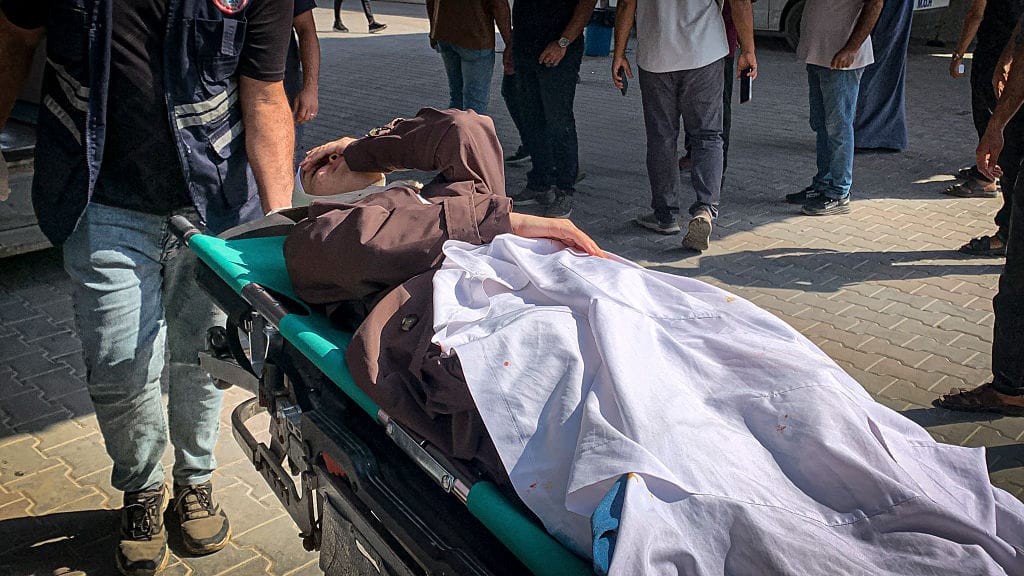
No society is more shameless about weaponizing grief than Israeli society, which has built a genocidal state on the exploitation of Holocaust memory. The manufactured grief that surrounds the Oct. 7, 2023, attacks—practiced by Israeli officials, AIPAC lobbyists, and politicians beholden to anti-Palestinian interests—has little to do with the gleeful videos filmed by Israeli soldiers, who slaughter innocents and dress up in their clothing.
In Occupied Jerusalem, the Museum of Tolerance—built atop a Palestinian Muslim cemetery—is perhaps the ultimate structural demonstration of what it means to erect a monument to grief on the bodies of those who are deemed unworthy of it.
The end of grief?
When I visit my grandmother in Panama, my interactions with the customs officers are generally pleasant. This may be because my birthday, Jan. 9, is also Martyrs’ Day, which commemorates the riots of Jan. 9, 1964, when 21 students were shot to death by American officers for the crime of raising the Panamanian flag and entering the Canal Zone.
Upon looking at my passport, the officer nods, impressed. “Jan. 9, huh?” It’s promptly stamped.
My birthday is meant to be a date of national mourning. But as the years have passed—with many happenings, such as the U.S. invasion of 1989, the Canal grudgingly being handed over to Panama at the turn of the century, and the semi-colony’s continued attempts to escape Washington, D.C.’s grip in favor of a more beneficial relationship with China—I don’t know if there is any solemnity left. There may still be restrictions on alcohol sales and the use of loud sound equipment, but there is too much generational distance for the obligatory flag-lowering to be met with real grief. It has become, simply, another holiday.
As mournfulness loses legitimacy and popularity, AI—like Donald Trump—feels like a celebration of the end of humanity.
The American president—who is periodically obsessed with Panama—is an acceleration of this trend toward irreverence. He never expresses grief. He never seems the least bit sad, even at events where he is expected to lay a wreath. And he never fakes tears like his predecessors or fellow statesmen. In some ways, he is a refreshing embodiment of pure power, not coated in disingenuous laments or regrets.
As mournfulness loses legitimacy and popularity, AI—like Donald Trump—feels like a celebration of the end of humanity. This technology is the final step in the love affair with robots, rocket ships, and computerized voices. Those who force it on our countries don’t recognize the beauty of the Earth anymore, just like they cannot—or can no longer—feel the suffering of others.
They cannot contemplate grief. They want a world without it.
Sometimes, sadly, at the end of years of memory work—reading through testimonies, trying to move people, trying to capture human tragedy on a page and gain something from it—you face the death of your cat. And you feel like it’s all a waste. That being human should just consist of the micro, not the macro. Small acts of kindness, cuddles, working on your relationship, caring for a loved one, volunteering in your community. As if maybe this kind of memory work is simply masochism, a distraction, a compulsion.
If you have the privilege to grieve, why should you grieve strangers, even if they look like you? Especially when the act of grieving strangers, in the public arena, has been cheapened: It’s usually done with an ulterior agenda.
But maybe grieving for strangers, earnestly, is a refusal to see memory, suffering, and unfinished love be coerced. Maybe real grief keeps real love alive. And maybe grieving for those outside of our lives is proof that we are truly part of a world. Maybe the ache caused by the absence of our loved ones is the ultimate proof that we are alive.
I write this not far from Laura, knowing that we’ll still see Mimi in our dreams. Sometimes she even wakes us up, startling us, jumping on the bed in the middle of a nightmare. And when I’m alone in the house, trying to write, I still feel her lingering; I see her sudden movements, I walk by her bowl and almost fill it to the brim with very cold water, the way she likes it. I see her taking in the space; I feel her worrying about us. I feel her everywhere, and when I leap up in the morning when the sky is just barely visible, worried about her medicine, I feel relief that I haven’t missed it, and then I feel dread that she won’t sit with me and look at the condors, who soar in the morning fog.
I’m grateful to still be able to feel so much grief.
Editorial Team:
Tina Vasquez, Lead Editor
Lara Witt, Top Editor
Stephanie Harris, Copy Editor
Avik Jain Chatlani