Filed Under:
Arab Mother’s Day opens fresh wounds in Gaza amid the genocide
Celebrating the typically joyful holiday feels impossible when countless children have lost their mothers, and many mothers are left without their children or families
Esraa Abo Qamar
Real journalists wrote and edited this (not AI). Independent, community-driven journalism survives because you back it. Donate to sustain Prism’s mission and the humans behind it.
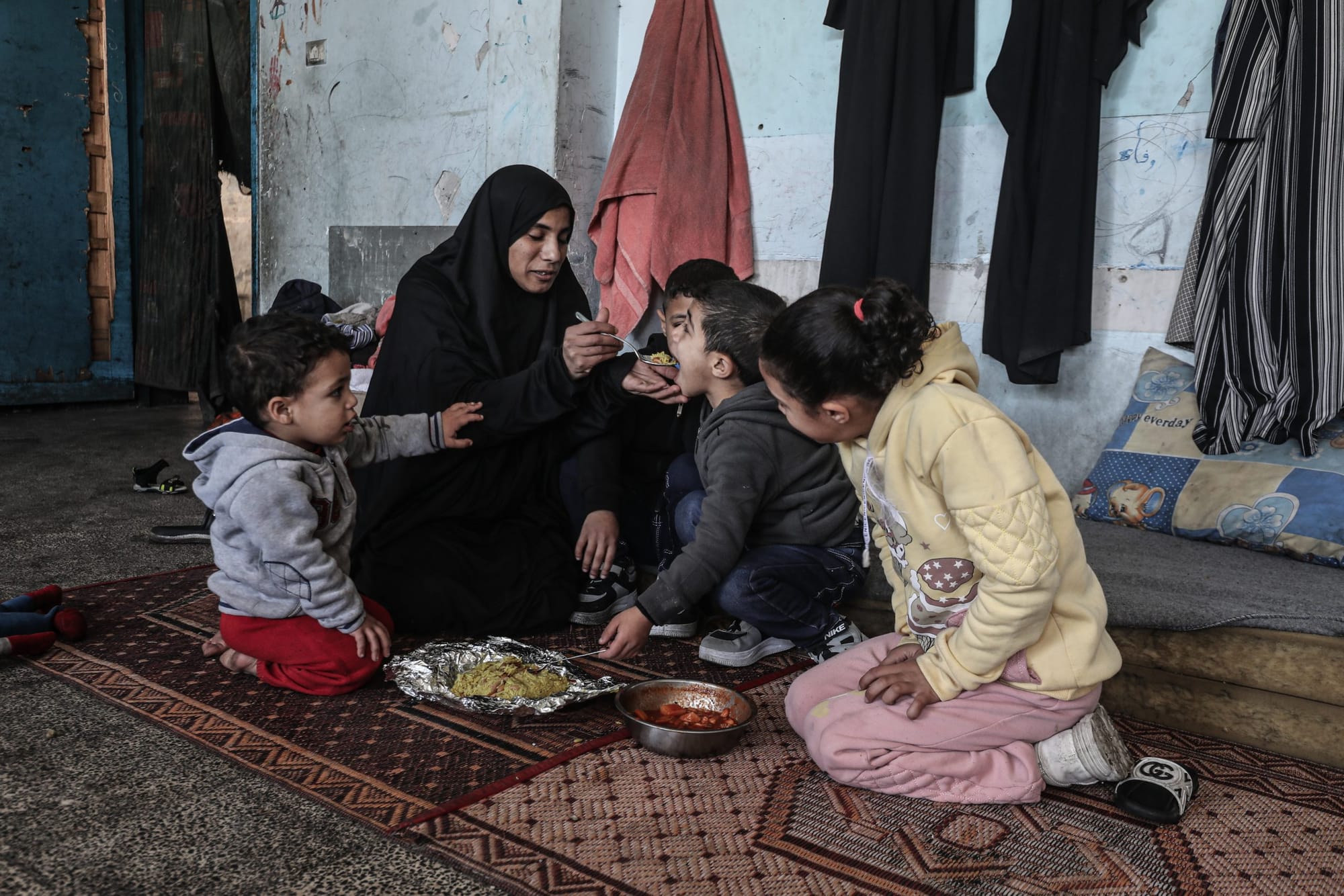
In most Arab countries, Mother’s Day is celebrated on March 21, a time filled with appreciation for our mothers and the women who raised us. On this day in Gaza, shops would typically compete to fill their shelves with the most beautifully wrapped gifts and heartfelt cards, each carrying messages of love and gratitude. The streets would bloom with flowers and roses, especially in front of school gates so that children could rush after school to buy small but meaningful gifts to surprise their mothers.
But since Oct. 7, 2023, Mother’s Day in Gaza has been stripped of its meaning. How can these children celebrate when there are no mothers to embrace them, hold them, receive their gifts, or smile at their small gestures of love?
The day has been overshadowed by the unbearable loss that we encountered and turned into a day of mourning. Since the genocide began, according to UN Women, the Israeli occupation has killed 28,000 Palestinian women and girls: mothers, sisters, and daughters. Women and children make up nearly 70% of the total victims. Moreover, the war has devastated maternal and reproductive health care, placing thousands of pregnant women and new mothers at serious risk as hospitals collapse and access to medical care becomes increasingly limited, according to a recent Amnesty International report.
These numbers are not just statistics; they represent real lives, families, and children whose worlds have been shattered.
Twelve-year-old Amina Al-Khatib is one of the children whose life changed forever. In 2024, an airstrike hit her family’s home while they were all inside. Within moments, the house that once held laughter, family meals, and everyday memories was reduced to rubble. The attack killed Amina’s mother, father, and siblings, leaving her as the only survivor.
Amina herself was seriously injured. A shrapnel struck her foot, leaving her unable to walk for some time. She faced a long recovery, receiving treatment while also trying to process the unimaginable loss of everyone she loved.
Today, Amina lives with her paternal grandmother, the only family she has left. But even in the safety of her grandmother’s home, the emptiness of her loss follows her everywhere.
“I miss my family so much, and I miss my mother,” Amina told Prism.
For Amina, Ramadan this year has felt painfully different. What was once a time filled with warmth, family gatherings, and the comforting smell of her mother’s cooking became a month marked by silence and absence.
“I spent the whole Ramadan feeling alone,” she said.
Every year my mother used to take us to buy new clothes for Eid. But this year my mother isn’t here to do that anymore.
Amina, 12-year-old whose family was killed by an airstrike
As Eid approaches, the memories feel even heavier.
“Every year my mother used to take us to buy new clothes for Eid,” Amina recalled. “But this year my mother isn’t here to do that anymore.”
Beyond the big moments, Amina misses the small daily routines that once made her feel loved and cared for.
“My mother used to brush my hair every morning before school,” she said. “She would make beautiful hairstyles for me and tell me how pretty they looked.”
Now those mornings feel different.
“I miss my mom, my dad, and my brothers and sisters,” Amina said.
As scores of children lost their parents, many mothers lost the children that brightened their homes.
Lina Quffa lost her husband and three children in an airstrike, leaving her alone with only memories and their belongings.
On March 21, 2024, just days before the attack, the family was sitting together during Ramadan eating their pre-dawn suhoor meal when her husband, Ahmad, told them he had a beautiful dream.
“He said he dreamed that he took our children, Aref, Sara, and Abdulrahman, and left me alone at home,” Quffa said. “He said he closed the door and told me, ‘Because I love you, I didn’t want to take you with me.’”
The dream unsettled her.
“That day I felt very afraid,” she said.
Three days later, Quffa’s’s fear turned into reality.
She remembered the small moments of that day with painful clarity. While she was preparing iftar to break their fast, her daughter, Sara, wrapped her arms around Quffa’s legs and said something she would never forget.
“Mom, we are going to travel, me, my dad, and my brothers, but we won’t take you with us,” Quffa said Sara told her.
Quffa laughed at the time and replied playfully, asking her daughter not to leave her behind. But Sara hugged her and said, “Just remember, Mom, that we love you very much.”
That evening, Quffa said her son Abdulrahman insisted on taking a shower and wearing his nicest clothes, even though she told him it was unnecessary.
“He wanted to dress up, put on perfume, and wear his watch,” she says. “Aref and Sara also dressed nicely like him.”
The children had been fasting that day. Lina prepared the Ramadan table, and they sat together listening for the call to prayer for iftar. Because the sound of drones filled the sky, they did not hear the adhan clearly and broke their fast by checking the time for sunset.
While they were eating, Quffa said Aref told her, “Mom, I feel something very beautiful will happen today.”
She smiled and told him, “Inshallah,” God willing.
Her husband laughed and told their son jokingly, “Yes, today we will go to heaven.”
After iftar, the family prayed together, and Ahmad took the children to visit his family and prepare for the evening prayers. Quffa stayed home because she was exhausted. Before he left, Ahmad came back upstairs for just a moment.
“He hugged me and said, ‘I love you,’” Quffa recalled.
That was the last time she saw them alive.
Quffa was planning to join her family later that evening. But before the night ended, a missile struck her in-laws’ home.
“The explosion was extremely strong,” Quffa said.
She rushed toward the house, climbing over rubble, desperate to find her family. One by one, the bodies were pulled from the ruins.
Ahmad was found holding two of the children in his arms. At the hospital, Quffa held them, kissed them, and smelled their clothes.
“They looked as if they were sleeping,” she said.
Her son Aref was found under the rubble the next morning. Quffa believed he could not bear the loss of his father and siblings.
Today, Quffa keeps the few belongings that remain from them: Ahmad’s phone, the watches her sons used to wear, and Sara’s earring.
“Their scent is still there,” she said. “It feels like musk. I keep their things close to me so I can hold them and remember them.”
Too many women in Gaza continue to endure such heartbreak.
On Mother’s Day, those losses feel especially cruel. Instead of flowers, there are graves. Instead of joy, there is grief. Palestinians wonder: How can anyone celebrate when thousands of Palestinian children can no longer embrace their mothers? When Palestinian mothers are left grieving over their families that will never be whole again?
Editorial Team:
Sahar Fatima, Lead Editor
Lara Witt, Top Editor
Rashmee Kumar, Copy Editor
Esraa Abo Qamar
Filed Under: