Filed Under:
My Nipsey Hussles: the importance of Black haircare in prison
For incarcerated Black women, the ability to do our hair nicely on special occasions provides a crucial agency that is stripped from us in many other aspects of our lives
Tomiekia Johnson
Real journalists wrote and edited this (not AI). Independent, community-driven journalism survives because you back it. Donate to sustain Prism’s mission and the humans behind it.
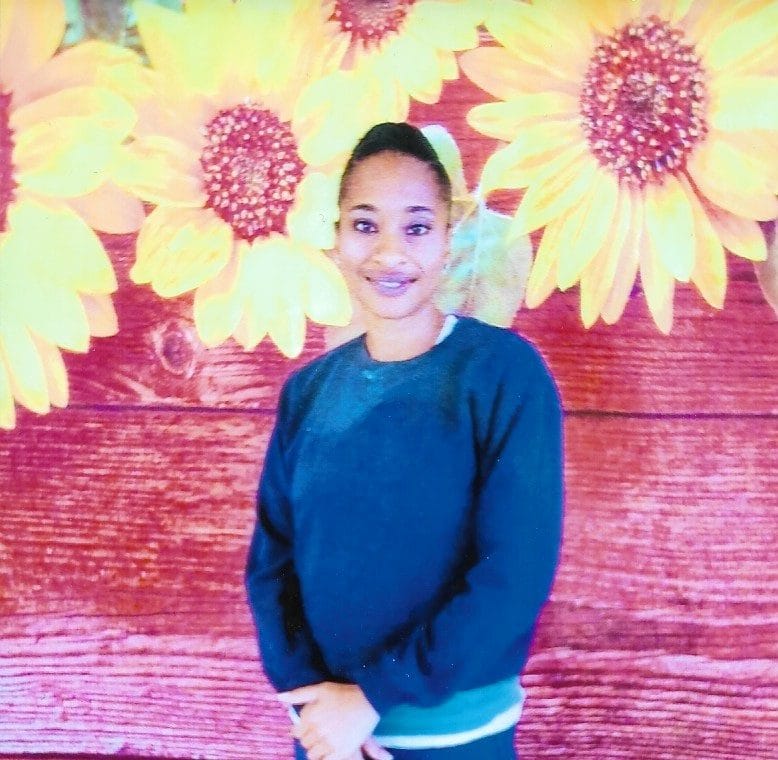
Memorialized in my prison mugshot are my “Nipsey Hussles”: four straight-back cornrolls I wear in homage to the late Los Angeles rapper. Before he was shot and killed in 2019, Nipsey was a dedicated community activist who helped launch initiatives like the #TimeDone movement to remove barriers to jobs and housing for Americans with convictions. He sought to reduce gang violence and advocated for police abolition and education equity.
I mostly wear my Nipsey Hussles to celebrate his legacy. But, in doing so, I also honor my own strength as a Black woman in the face of all who try to keep me down at the Central California Women’s Facility (CCWF).
Even before I got to CCWF, I knew there was a social stigma against Black hair. In schools, Black children get kicked out for wearing dreads or are forced to cut their locs to remain on sports teams. In workplaces, Black women’s natural hairstyles are deemed inappropriate or unprofessional.
But after I got to CCWF, I truly started to understand the level of white discomfort with Black hair, and the lengths that those in power would go to degrade our hair agency. One memorable example is when I helped one of my prison elders who has alopecia with a grievance to recover the costs for a medically prescribed human hair wig. An assistant warden had sent her an appointment slip for a fake self-help group, knowing she would apply makeup, wear her nicest state uniform “blues,” and top off her self-esteem and joy with that wig. To my elder’s dismay, she arrived at an empty classroom to find the warden and another employee lying in wait to confiscate her wig—a sucker punch.
I put my best work into that grievance and won the fair market value of my elder’s wig. Black hair has been my beat ever since.
Of course, much of my inspiration also comes from Nipsey; I first heard “Racks in the Middle” after his death in 2019. I already wore braids to embrace hip-hop, R&B, and gangster rap culture without apology, but for the next year I walked around rapping his songs feeling more connected to my upbringing than ever before.
It’s the coolest thing, Black men and women wearing the same hairstyles, a perfect balance of masculine and feminine.
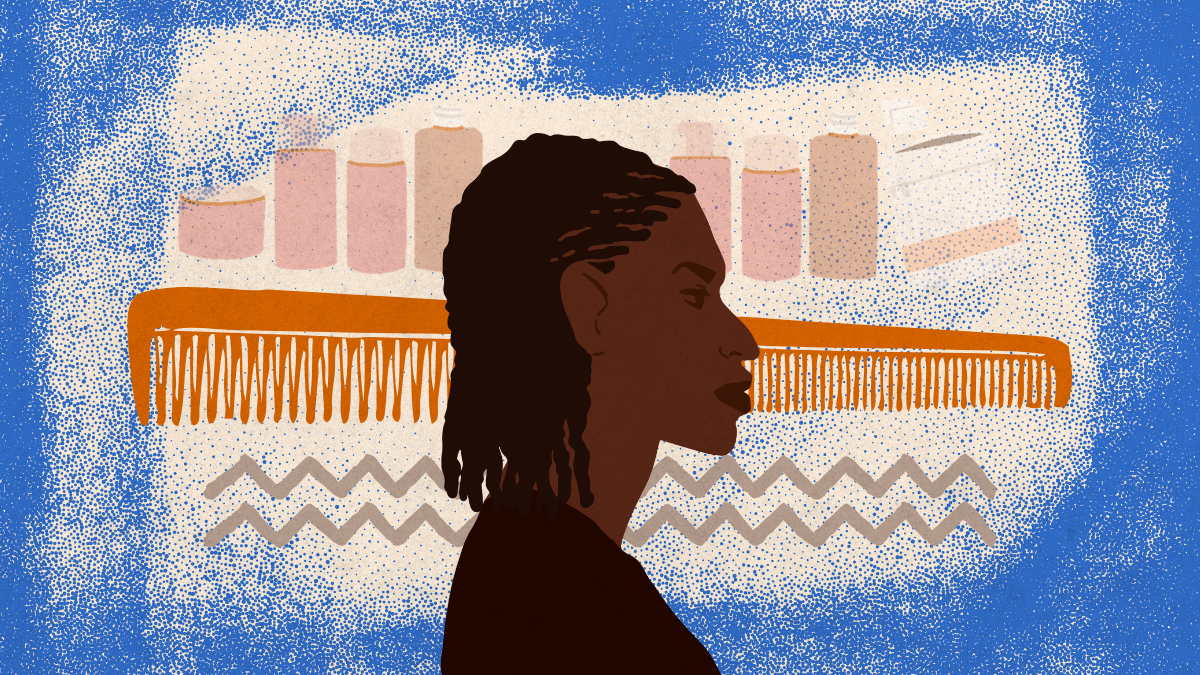
I wish I could share hair secrets with Nipsey. I would tell him how a woman from Compton—who learned how to braid her own hair in prison—gets the shine his hair embodies. I’d tell him my routine: how, before I braid in my Nipseys, I wash my hair with Cantu Shea Butter Sulfate-Free Cleansing Cream Shampoo, rinse, then apply Luster’s Pink Revitalex Conditioner. Sometimes I leave it in to comb through my lion’s mane and style it. For daily manageability, I apply Hawaiian Silky Creme Conditioning No Lye Relaxer every eight to 10 weeks.
This is the tip of the iceberg of the ways I like to care for my hair. For incarcerated people, the ability to do our hair nicely on special occasions provides a crucial agency that is stripped from us in many other aspects of our lives. A wash and rinse, followed by my favorite serum, a slow air dry, then parting my tresses line by line up from the nape of my neck—this ritual makes me feel cared for, pampered. In charge.
I get my products from Walkenhorst’s, a company that supplies incarcerated individuals with anything from snacks to electronics to clothing to beauty products. But just because something is available doesn’t mean I have access to it. Months ago, a woman I know with perfect, shiny, sleek tresses showed me her haircare secret: a bottle of L’Oreal Paris Sleek It Iron Straight Heatspray. I found it, reasonably priced, in the Walkenhorst’s catalogue and added it to my cart.
But, as it turns out, I won’t be testing out the miracle heatspray anytime soon. Soon after ordering the product, I was suddenly rounded up by prison authorities and hauled off to administration segregation—also known as ad-seg, solitary, or the hole—on false allegations by staff and fellow inmates. Although I’m a model prisoner—one who creates public service announcements for firearm safety and addiction in my community—I was accused of planning to send myself a “semiautomatic weapon and drugs” via “drone drop.”
All I received for my haircare routine during my month in ad-seg was a Barbie doll-sized comb—black in color, not functionality—which pulled out so much of my hair, it was pretty much useless. No hair oil, conditioner, hairbrush. I even thought about using my two-inch toothbrush to wipe over my edges. A Black woman a few cells down yelled from behind her metal door, “I have to braid my hair before it falls out.” Exactly.
Black hair is a living, sacred expression of our humanity, and it should be treated with respect in all spaces. While some incarcerated Black women can enjoy the hair products I’ve mentioned for purchase, not everyone can afford them. And, as my experience testifies, some spaces turn a blind eye to our needs in ways that are not just negligent but harmful. Sometimes, all it takes is one small bottle of shampoo, or leave-in conditioner, or a wide-tooth comb, to save a woman’s life.
The Right to Write (R2W) project is an editorial initiative where Prism works with incarcerated writers to share their reporting and perspectives across our verticals and coverage areas. Learn more about R2W and how to pitch here.
Editorial Team:
Rikki Li, Lead Editor
Lara Witt, Top Editor
Rashmee Kumar, Copy Editor
Tomiekia Johnson
Filed Under: