Filed Under:
Carbon capture and sequestration lacks regulatory framework and allows corporations to profit
Projects that inject carbon dioxide deep under the surface of the Earth will cost taxpayers tens of billions of dollars, benefiting the same companies that have profited from fossil fuel extraction

ray levy uyeda
Real journalists wrote and edited this (not AI). Independent, community-driven journalism survives because you back it. Donate to sustain Prism’s mission and the humans behind it.
Is the ocean the next frontier for a novel form of carbon dioxide disposal?
According to advocates, the answer is yes—and the move by corporations to inject the greenhouse gas deep under the seafloor signifies an alarming trend in climate mitigation. The practice allows corporations to earn money for disposing their own highly profitable, highly polluting product responsible for a majority of the Earth’s warming.
Made possible by the Biden administration, which significantly expanded the 45Q tax credit in 2022 allowing companies to earn money for underground disposal of carbon dioxide, dozens of companies are now seeking to cash in by setting up shop in Louisiana. Environmental regulations are lax and decades of oil and gas operation have laid the groundwork for further buildout in the industry-friendly state.
Resistance from local residents halted Louisiana’s consideration of proposals to drill exploratory and injection wells, known as Class V and Class VI wells, respectively. Facing pushback in one state, policy experts and environmental advocates now warn that companies are looking to pivot their efforts next door to the Gulf waters off the coast of Texas, out of range of opposition.
Concerns abound
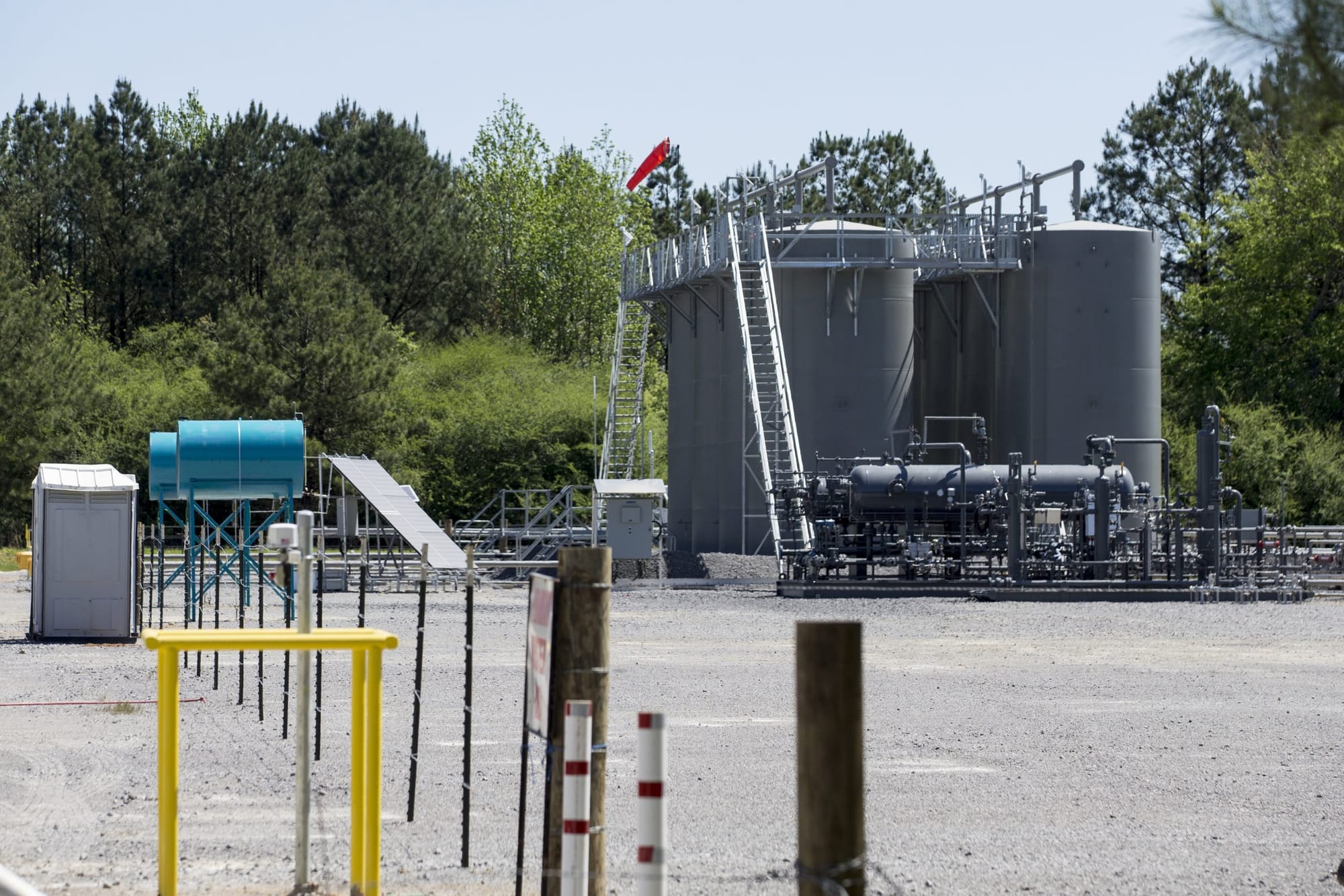
Touted as a key component of decarbonization, carbon capture and sequestration (CCS) is the process by which supercritical carbon dioxide is injected deep under the surface of the Earth into wells, usually a saline reservoir. Any operator that captures carbon dioxide and in turn sells it to a third party can claim the 45Q tax credit.
“There are about 400 square miles of available lease land in the continental shelf in the Gulf that could be used for sequestration,” said Hailey Duncan, the federal campaign coordinator for Food & Water Watch, a progressive advocacy organization based in Washington, D.C.
The Bureau of Ocean Energy Management (BOEM), the federal agency that manages oil and gas leases in the Outer Continental Shelf, is expected to release a new inventory of regulations, establishing rules regarding standards of operation to consequences for noncompliance. Even with further guidance, regulatory gaps remain, warned Duncan.
Duncan’s organization isn’t the only one that wants answers.
Concerns abound regarding how quickly CCS is being built out and how much influence corporations have over the rulemaking of their own industry. Residents near the storage sites and pipeline paths say there are private property laws that require enforcement, and they want answers from state leadership about what might happen in the case of a spill, which could potentially inundate a region with carbon dioxide and lead to asphyxiation. In 2020, a carbon dioxide pipeline in Sataria, Mississippi, ruptured. Within minutes, members of the small town became seriously ill, collapsing, gasping for air, nauseated, and dazed, Huffpost reported. Months later, residents still grappled with mental fogginess, lung dysfunction, chronic fatigue, and stomach disorders.
Environmental advocates also warn that the method of carbon removal doesn’t result in the best bang for the public’s buck, and policy wonks are sounding the alarm that businesses are being allowed to move forward without a robust regulatory framework in place.
There’s also concern among advocates that new regulations won’t reduce emissions enough to avert the most severe consequences of climate change, as outlined by the Intergovernmental Panel on Climate Change’s Sixth Assessment Report. How the federal government implements the 45Q tax credit and establishes regulations is also partially in the hands of Gulf state communities.
Litzy Chavana is the chief of operations at the Raices Collaborative, a Houston, Texas-based community advocacy organization. She told Prism that corporations’ CCS efforts are “greenwashing,” meaning their environmental actions appear ameliorative but actually only perpetuate harm.
“This technology is harming our communities and our livelihoods,” Chavana said. “We are trying to protect our communities in whatever way we can.”
Chavana told Prism that she wants to see BOEM, the Texas Commission on Environmental Quality, and the Railroad Commission of Texas (RRC) that monitors the oil and gas industry in the state, take communities’ concerns into consideration. Residents in Harris County and across the Lone Star state live with oil and gas operations in their backyards. Pipelines traverse resident’s fencelines, and out-of-commission oil wells dot the landscape, much to the frustration of impacted landowners.
Even if the offshore injection wells are located under the seafloor, pipelines will likely traverse some of Texas’ privately owned and publicly enjoyed land. New carbon pipelines will also need to be built with tougher steel and thicker walls because carbon dioxide can’t simply be pumped through existing oil and gas pipelines; the substance is too corrosive.
In trying to get ahead of a CCS buildout, Chavana’s organization hosted a series of town hall meetings to educate residents on the buildout of CCS technologies across the state and encourage attendees to send letters to representatives at the RRC.
In November, the Environmental Protection Agency (EPA) granted the RRC what’s known as “primacy,” which bestows the primary regulatory capacity of Class VI wells—the ones used for carbon storage—to the state agency.
This concerns Chavana.
Not only do regulatory agency commissioners accept political donations from the very entities they’re tasked with monitoring, but investigations have also found that fines companies pay for noncompliance are funneled back into industry-affiliated nonprofit organizations.
Conversely, the 45Q tax credit that funds CCS projects will cost taxpayers tens of billions of dollars over the next two decades—all to encourage the companies that have profited the most from fossil fuel extraction to dispose of a fraction of the harmful gas their products produce. Exxon, for instance, which knew about the climate change-causing effects of burning fossil fuels as far back as the 1970s, has leases in the Outer Continental Shelf with its sights set on carbon injection.
Functional technology vs. mitigation strategy
The ocean is already one of the Earth’s largest carbon sinks—second only to the Earth itself. Its ability to sequester carbon from the atmosphere is what has helped to keep the Earth in balance and cycle nutrients through aquatic ecosystems.
Historically, the ocean has absorbed a quarter of industrial emissions, though that is changing. Global emissions have reached a point that sequestered carbon dioxide is detrimental, rather than beneficial, to the ocean’s ecosystems. Too much carbon dioxide can lead to ocean acidification, which the federal National Oceanic and Atmospheric Administration calls as a “global threat” to the entire oceanic food chain.
Susan Hovorka, a professor in the Jackson School of Geosciences at the University of Texas at Austin, said that CCS technology is sound. In fact, she told Prism that the industry should have started injecting carbon dioxide under the seafloor years ago.
Hovorka runs the Gulf Coast Carbon Center, a partnership between the university and the oil and gas industry that works on economically viable approaches to geologic sequestration of carbon dioxide.
As long as there are industrial processes that result in carbon dioxide emissions, there should be attendant technologies that can deal with those emissions, Hovorka claimed.
“It’s not a miracle cure,” Hovorka told Prism. “If you find yourself needing to use a fossil fuel … if you need plastic or if you need steel or cement, these emit a lot of CO2. … CCS allows you to proceed about your business while mitigating the climate impacts.”
The ocean might be the best place to do this because it’s “geologically ideal,” Hovorka said, referring to its unperturbed “young” formations with few existing wells drilled into them. “The rocks that are down there at a mile depth are some of the best on Earth, some of the best we have in the U.S.,” she said.
“Now, does the ocean need protecting? Absolutely, it’s getting damaged,” the professor added. Even in the case of a spill, those damages would be minor, she hypothesized. “Some of the worst damage from climate change is [in] the ocean … [but] we’ve done a lot of studies of what happens to CO2 and ocean water, [and] the answer is, mostly, it dissolves pretty quick.”
In other words, there’s a way to execute CCS more responsibly, and there’s a way that, if regulators don’t do their jobs, allows for more risks. Educating the public on the risks and ensuring that agencies are well-staffed could be a means of addressing the unanswered questions surrounding CCS.
Romany Webb, the deputy director of the Sabin Center for Climate Change Law at Columbia University, told Prism that industry has neither effectively engaged with the communities impacted by their operations, nor has the oil and gas industry proven that they can self-monitor and be trusted to report accurately.
However, “if you do things the right way, if you choose the right formations, if you’re managing your wells properly, [then] those risks can be significantly reduced,” Webb said.
“We need [CCS] to be robustly regulated so that we can make sure that it’s delivering the climate benefits we want it to deliver,” she added. “We don’t want to be putting CO2 underground only to have it leak out a few years later. That does nothing for the climate.”
“A wildly unrealistic climate solution”
Webb’s comment begs the question: What would do something for the climate and actually bring down atmospheric levels of carbon dioxide to slow the progress of global warming? Critics of CCS say it’s implausible the carbon removal method can actually meet the moment.
The world emits about 33 billion tons of carbon dioxide a year. Even the most ambitious CCS projects underway in Europe and the U.S. aim to capture a mere fraction of a few thousand tons of that total amount. The Institute for Energy Economics and Financial Analysis also finds that the operational CCS systems are underperforming by as much as 50%, leading the research organization to the conclusion that CCS is “wildly unrealistic as a climate solution.”
This mirrors findings published in the third State of Carbon Dioxide Removal report, research conducted by an independent consortium of institutions, which argued that the market-based approach to emissions reductions is an unreliable approach.
“[CCS] should play a smaller role than emissions reductions given uncertainty around the feasible levels of scaling, sustainability limits, storage availability and the risk of reversal, among other constraints,” the report said. Carbon dioxide removal “should be seen as a limited resource that will need to be used prudently.”
The report claims that emissions reductions should account for at least 80% of the global net-zero goal established by the Paris Accords. Carbon dioxide removal constitutes the rest—though that doesn’t necessarily have to come from CCS. According to the Intergovernmental Panel on Climate Change’s Sixth Report, carbon capture and storage is the least feasible mitigation option, based on cost and efficacy, behind solar and wind scaling, methane emissions reductions, bioelectric, geothermal, hydroelectric, and nuclear power generation. As it stands now, CCS is on track to comprise 2.4% of the world’s carbon dioxide mitigation by 2030.
Given how developed the consequences of climate change are, and because the warming effects of carbon dioxide persist long after the gas is sequestered, the scientific community is now shifting its recommendations: Net-zero emissions is no longer the goal; humans have to achieve net-negative emissions.
Even if the technology is safe enough to be given the green light, and even if carbon removal must account for a component of emissions mitigation, some feel that the largest and long-term benefit isn’t to the public—it’s to the very industries that helped foment the climate crisis.
Matt Rota, the senior policy director for Healthy Gulf, an environmental advocacy organization that works with and alongside Gulf communities, told Prism that CCS “is just another last gasp of the oil and gas and petrochemical industry trying to keep a stranglehold on the American economy by taking federal funds.”
Editorial Team:
Tina Vasquez, Lead Editor
Lara Witt, Top Editor
Stephanie Harris, Copy Editor
ray levy uyeda
Filed Under: