How Gaza’s cash-flow crisis impacts daily life
The lack of small bills means that vendors don’t have change and customers don’t have exact amounts. Meanwhile, electronic payment systems and intermediaries take large commissions
Athar Ihab Abu Samra
Real journalists wrote and edited this (not AI). Independent, community-driven journalism survives because you back it. Donate to sustain Prism’s mission and the humans behind it.
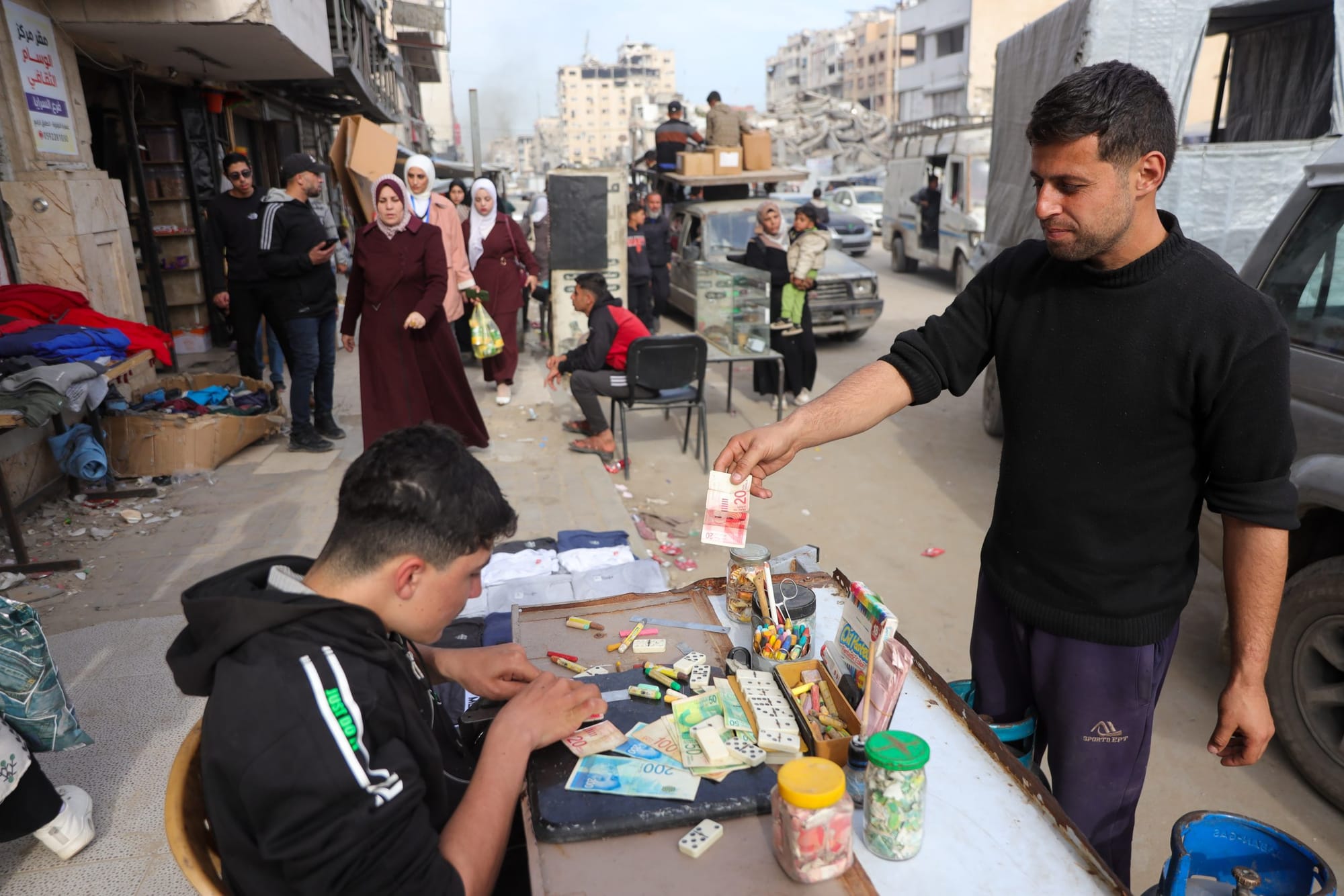
On a street in Deir al-Balah, Gaza, Najia Ahmed, held her daughter’s hand as the girl asked to buy a balloon. The price was small, but the vendor replied: “I don’t have change.”
Ahmed, 49, left feeling embarrassed, and something deeper. “It’s painful,” she told Prism.
Since October 2023, almost no new cash has entered Gaza after banks shut down at the start of the genocide. What began as a temporary disruption has become a severe liquidity crisis affecting everyday life. Today, the lack of small bills can prevent Palestinians from buying medicine, bread, or even juice.
Local and international reports say commissions for accessing cash through intermediaries—known locally as “takyeesh,” or cash-out services—reached up to 55% in 2025. According to Sada News and Al-Araby Al-Jadeed, someone transferring $100 electronically may receive only about $60 in cash after fees, with much of the value lost before reaching them.
A long-term banking paralysis
In October, Reuters reported that some bank branches started to reopen, but vaults remained largely empty.
Residents can make electronic transfers, but withdrawing cash is nearly impossible.
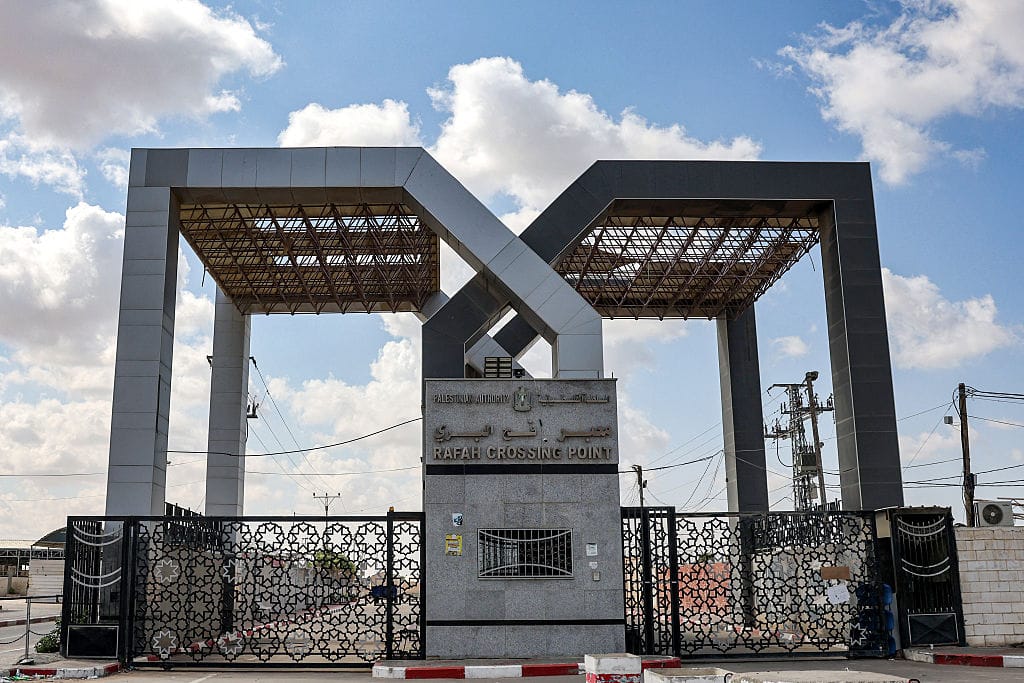
Rasha Al-Zurai, a civil employee at the Rafah crossing, said Israeli restrictions limit cash entering Gaza. According to her, people returning to the enclave can usually carry no more than about $600 per person, allowing only small amounts of money to reach the market.
Even electronic transfers—the main alternative to cash—are not always reliable. Across much of Gaza, internet and phone networks suffer frequent outages due to war-damaged infrastructure, sometimes lasting for days and disrupting daily life.
Haya Khaleel, a 25-year-old architect from Deir al-Balah, said many public transport drivers do not have reliable internet access at all, making it difficult to pay the fare.
“Sometimes we try to make a transfer and end up standing there for long minutes because the network is weak,” she explained. In some cases, the transaction fails entirely.
In local markets, traders complain that payment smartphone apps often freeze or disconnect in the middle of a transaction, creating additional tension between buyer and seller. A process that should take seconds can stretch into several minutes in an environment already marked by crowding, pressure, and constant anxiety.
Worn-out bills and a parallel economy
Reports indicate that about 93% of bank branches in Gaza have been damaged or rendered inoperative, making it nearly impossible to replace worn or torn banknotes, according to Al Jazeera.
With no new cash entering Gaza, markets are increasingly filled with worn and damaged bills that are often carefully inspected—or even rejected.
In response, a parallel cash economy has emerged, with intermediaries converting electronic balances into physical money for high commissions.
In Gaza today, obtaining cash often comes at a steep price. People transfer money through digital apps to intermediaries who provide physical cash after deducting a commission.
Khaleel said, “If you transfer 100 shekels, you might receive only 50 to 80 in cash.” She recalled needing to buy juice after her sister fainted, but searching for change took more than 15 minutes. “The feeling is helplessness and frustration,” she said.
In interviews with more than a dozen Palestinians in Gaza, participants said commissions ranged from about 8% in rare cases to as high as 50%, especially during periods of intensified fighting. Ahmed said she has paid 45% just to access her own money. Others reported similar experiences.
Small details, large consequences
The liquidity crisis is also seeping into the smallest details of daily life, particularly for young people.
Saja Awad Al-Batsh, a university student from Deir al-Balah, once tried to buy bread for her family. She had 20 shekels with her, but the vendor told her he didn’t have change. When she suggested transferring the money electronically, he refused. Al-Batsh ended up walking nearly two miles searching for a solution.
“It has deprived me of many things I wanted to buy,” she said.
Mohammad Al-Haddad said that sometimes he simply wants to buy a can of cola but cannot because there is no small change. Part of his money has effectively become “credit” at local shops, because vendors cannot return the remaining balance. Small, unwritten debts accumulate, turning the customer into a creditor without any guarantee.
Farah Abu Samra encountered an even more sensitive situation. She went to buy necessary medicine for a family member. After preparing the order, the pharmacist told her that he had no change.
A simple financial obstacle turned into a direct reason for delaying something essential for health.
Farah Abu Samra, Palestinian woman living in Gaza
“A simple financial obstacle turned into a direct reason for delaying something essential for health,” she said.
Several Palestinians also told Prism that they were forced to walk long distances because public transport drivers lacked small change.
Amira Sami Ahmed, a photographer, said a driver once asked her to leave the vehicle before reaching her destination because he could not return the remaining change. “The small-change crisis can disrupt my entire day and put me in embarrassing situations,” she said.
Others reported similar experiences, including one person who said he walked nearly four miles because he could not pay the exact fare, and another student who walked for half an hour for the same reason.
What is the solution?
Many of the Palestinians interviewed by Prism called for more liquidity and small change to enter Gaza. But the entry of cash is tied to political and security complexities that lie far beyond the control of ordinary residents. In the absence of a structural solution, the parallel cash economy continues to expand, while commissions steadily drain what remains of household income.
In a society already struggling with high unemployment and widespread poverty, losing any amount of money can be a devastating blow.
This Eid al-Fitr, the joyful holiday tradition of giving children eidiya—small amounts of cash—has become nearly impossible, according to Rafee Hussein, because of the severe cash shortage. Speaking in a Messenger call, he said with frustration, “Even if we want to give the children their Eid money, we simply don’t have the small bills.”
And so, in Gaza today, money exists but is often unusable.
In a place where almost everything is being redefined—from the meaning of safety to the meaning of home—the concept of money itself is also changing.
The question is no longer how much you have. It is whether you can reach it at all.
Editorial Team:
Sahar Fatima, Lead Editor
Lara Witt, Top Editor
Rashmee Kumar, Copy Editor
Athar Ihab Abu Samra