Gaza City once held my dreams. Its new reality is hard to stomach.
Through a day in his life as a student in Gaza, Ahmad Abushawish describes what has become of the cosmopolitan city where he once ventured to learn, innovate, and enjoy a night out
Ahmad Abushawish
Real journalists wrote and edited this (not AI). Independent, community-driven journalism survives because you back it. Donate to sustain Prism’s mission and the humans behind it.
It is 8 a.m. in Nuseirat camp in central Gaza.
I wake with a jolt, already late for the hackathon taking place in the northern part of the Gaza Strip. There is no time for hesitation. I step into a freezing shower, the water sharp against my skin on this wintry January morning. Heating it would mean gathering wood, lighting a fire, and surrendering another hour I cannot afford. Warmth, these days, is a luxury measured in lost opportunities.
I hurry through the streets for about half a kilometer until I reach the parking area beside Al Farooq Mosque. This is where the day will be decided. Choosing the wrong car—one without proper cover, one collapsing from age—means arriving soaked by rain or coated in the dust and exhaust that choke the road north on the 40-minute drive to Gaza City.
A simple ride, in most places, would be forgettable. Here, it can determine how you arrive, how you are seen, and whether you have the strength left to continue.
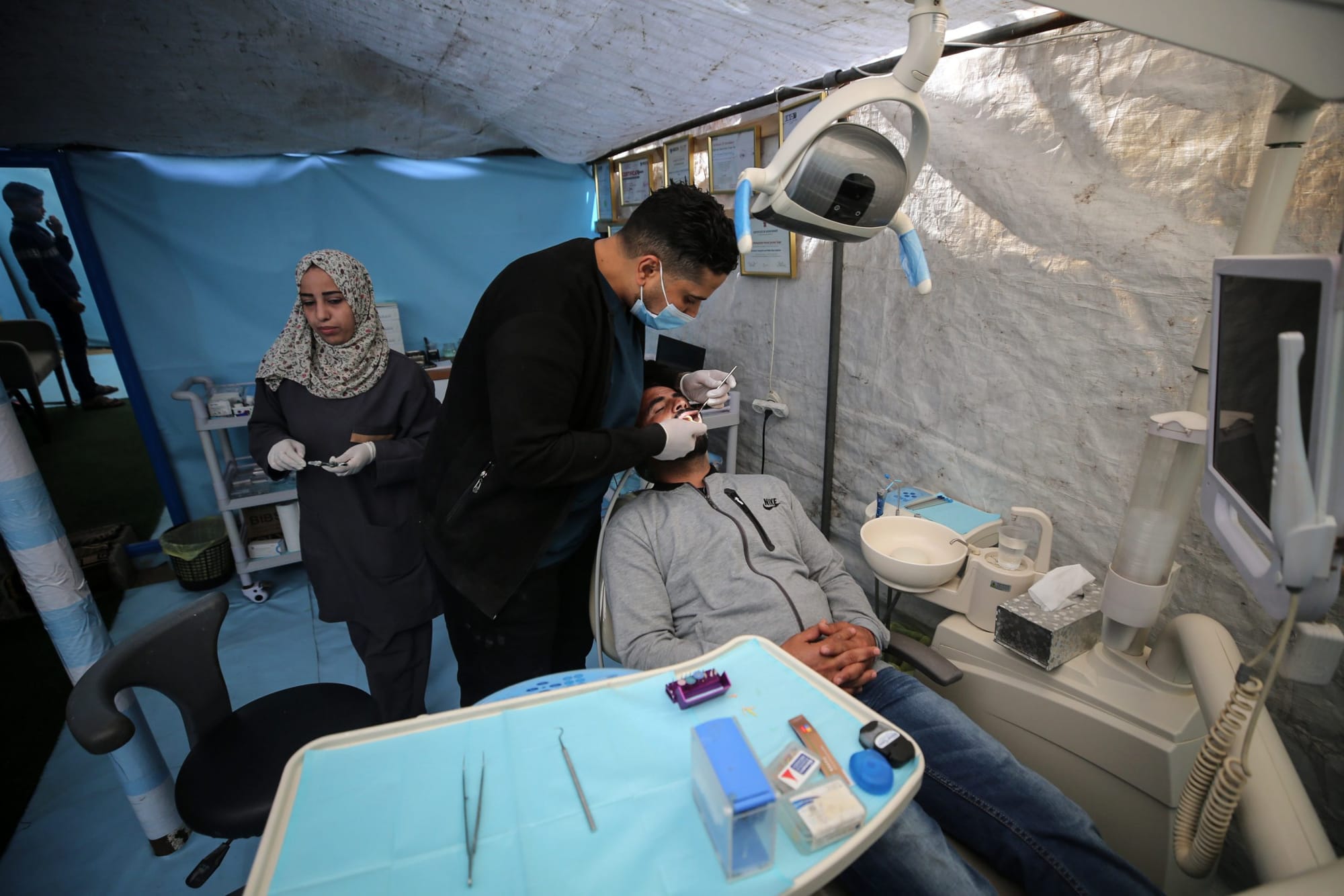
This is what life looks like during the so-called ceasefire in Gaza, during which Israel continues to kill hundreds of Palestinians. For students like me, an ordinary day still means navigating destroyed roads, shattered landmarks, and the quiet exhaustion left by months of devastation. The bombs may have been limited, but the struggle has only changed form. We move through rubble on our way to classrooms, competitions, and family homes, trying to continue our lives in a place where nearly everything familiar has been damaged or erased.
Inside the shared car, knees press against knees. The passengers are a random mix of people all heading north for their own reasons: work, errands, visits, university.
Someone jokes about the weather; another checks their phone for a signal that never comes. Through the torn plastic covering the windows, the Strip slips past in shades of gray.
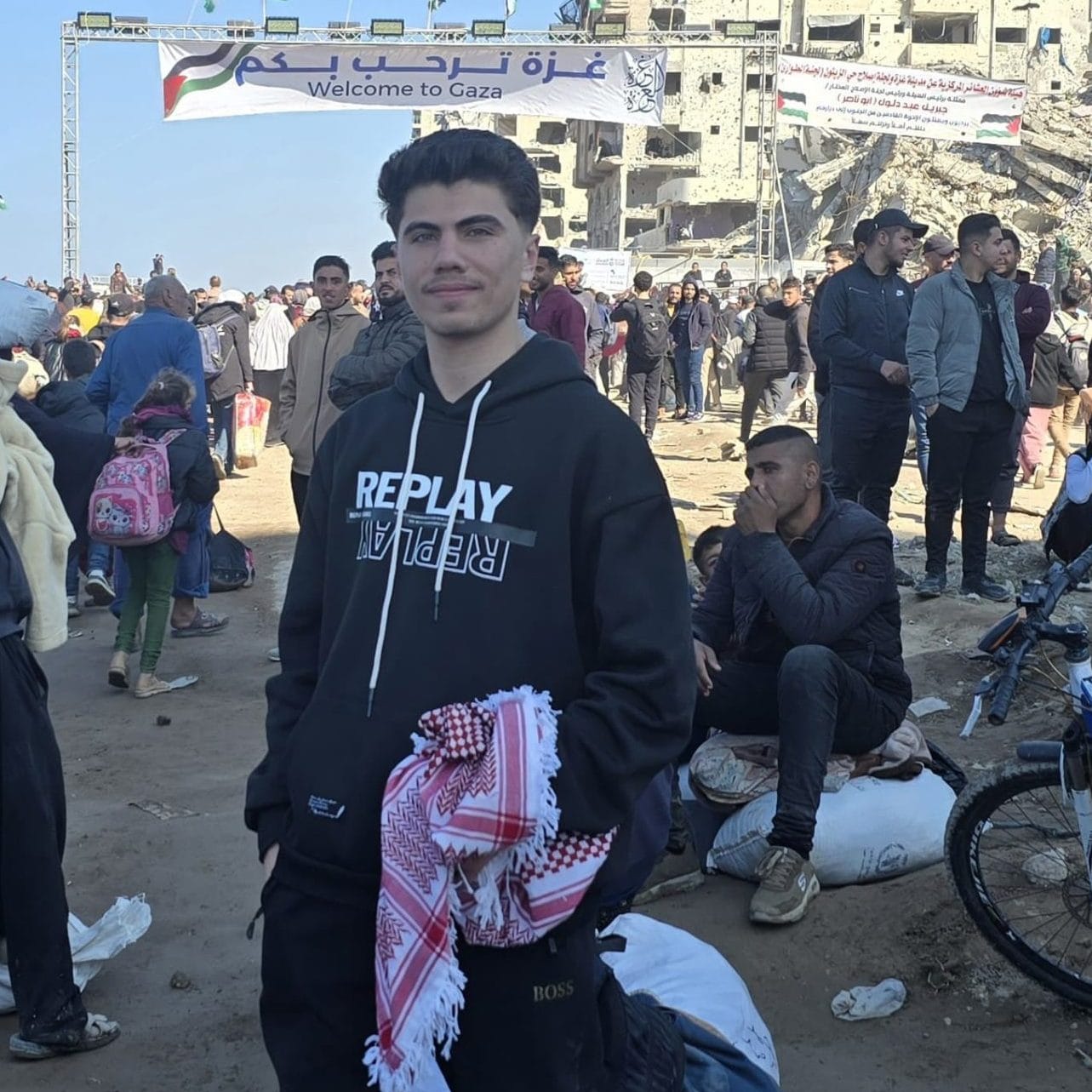
We pass what remains of Al-Zahra, once a small, elegant town known for its ordered streets and university buildings. Now, all that remains is a scatter of rubble, fragments of walls, and the suggestion that homes once stood here. For several kilometers, the landscape opens into a vast, unsettling vacuum. No shops. No pedestrians. No balconies. Not even ruins large enough to narrate what happened.
And then, almost without warning, movement returns. Cars. Street vendors. People crossing between buildings as if the void behind us had not swallowed entire neighborhoods. Gaza City rises ahead—wounded, crowded, impossibly alive.
The place that opened our world
I do not come here often anymore. Transportation is complicated. Yet every time I enter the city, I am struck by the same realization: This place once meant more to me than anywhere else.
It was here that I would attend Amideast, a U.S.-based nonprofit organization that provides education, training, testing services, and exchange opportunities across the Middle East and North Africa. In Gaza City, it was a doorway to a wider world. I practiced English, sharpened my soft skills, and found a community of ambitious young people who made the future feel closer. We spent long, joyful days walking through corridors between classes with the confidence of people who believed opportunity was right in front of us.
Just across the street in al-Rimal stood Abu Al Saeed Restaurant, our unofficial cafeteria. It served falafel, deep-fried balls of ground chickpeas and herbs, tucked into warm bread—cheap, filling, and perfect for students with long days and short budgets.
The city carried our celebrations too. During Eid al-Adha and Eid al-Fitr, we gathered at Capital Mall in al-Rimal. We wandered between shops, took endless photos, and argued—always cheerfully—about where to eat next.
We loved trying new places, especially Dajaj Broast, our favorite spot for fried chicken, made in a style similar to well-known international chains but proudly part of the local boycott culture.
But my connection to Gaza City began long before cafés and malls. My grandparents’ home is here. As a child, I learned its streets by heart on the way to visit them during holidays. I still remember the smell of coffee in their home, the way relatives filled every chair and hallway. The city was not only a destination for entertainment; it was part of my family’s map, a place where we built memories to last forever.
I grew up believing Gaza City would always hold us, no matter how much we changed.
I grew up believing Gaza City would always hold us, no matter how much we changed.
Now those same paths lead mostly through dust. Color has drained from the streets; everything collapses into the same stubborn gray.
A grim new reality
Before the genocide, Gaza had seasons of excitement that students waited for eagerly. We counted down, tracked obsessively, and talked for weeks about hackathons and entrepreneurship competitions in the beginning of the semester.
“Most of the final ceremonies took place at the Al-Mashtal Hotel, Gaza’s grandest venue, and stepping inside always felt like entering another reality,” said Logain Hamdan, a 23-year-old Flutter app developer and computer engineering graduate from the Islamic University of Gaza. “For a few hours, you could almost forget the borders, the restrictions, the weight outside. The lighting was warm, the hall enormous, the logistics flawless. It felt closer to the international hackathons we used to watch on TV than to the Gaza we navigated every day.”
That was the version of Gaza where ambition could briefly outrun geography.
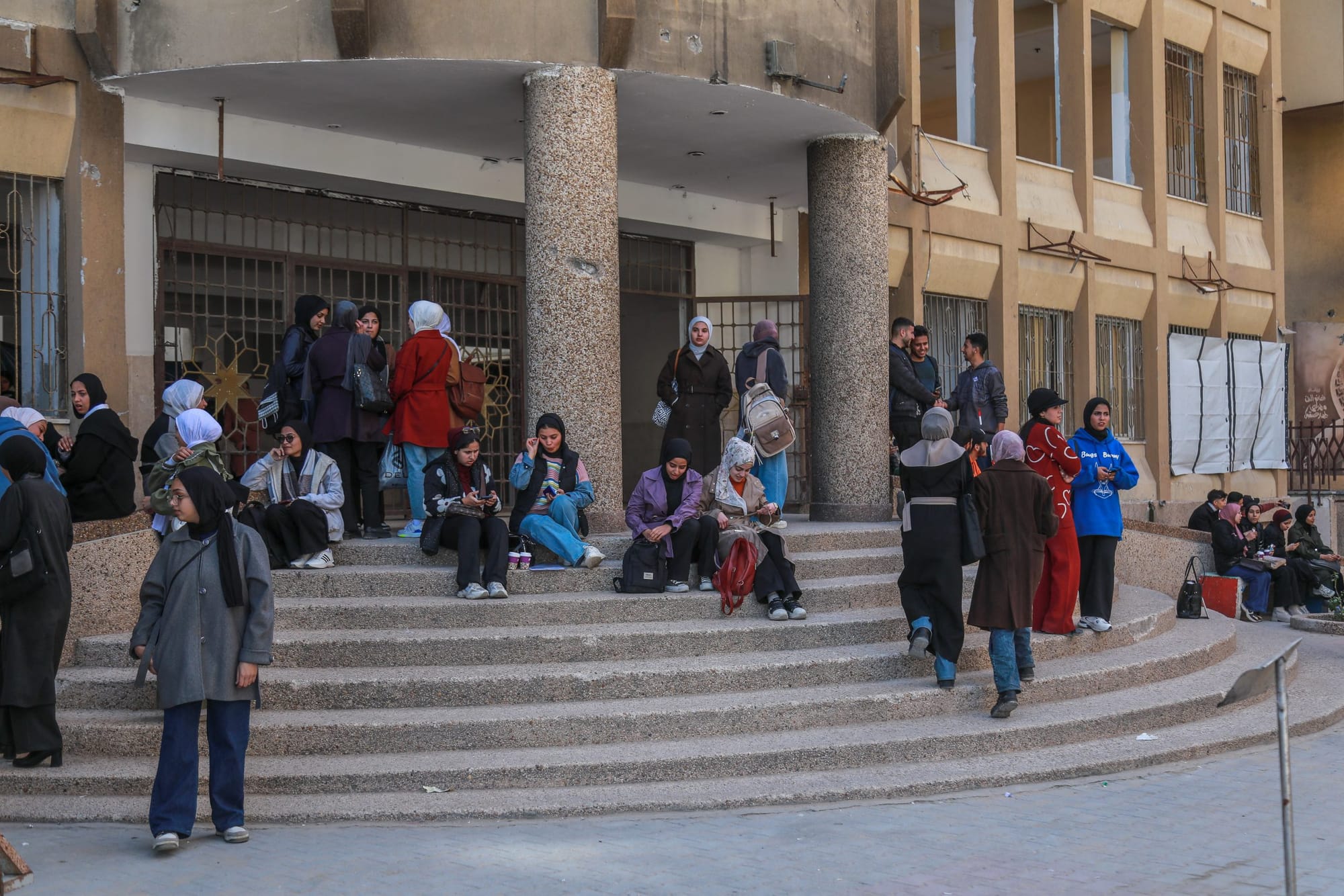
On this January morning, I arrived in Gaza City for the hackathon held at the new campus of the University of Palestine. I stop for a moment, unsure if I have understood correctly. The “campus” is the former building of Dajaj Broast
I try to reconcile the memory of trays of fried chicken and laughter with the sight of extension cords, plastic chairs, and banners about innovation. The distance between those two images feels greater than the miles we traveled to get here.
The event is called the “Reconstruction and Innovation Hackathon.” It carries none of the glamour Hamdan described—no chandeliers, no choreographed organizing committees in black suits, no giant ceremonial check lifted into the air. There is no million-dollar promise printed in bold.
Instead, generators hum in the background as students pitch ideas about rubble recycling, solar microgrids, water purification, and temporary housing solutions.
The ambition has not shrunk. It has simply become more urgent. If the hackathons at Al-Mashtal once imagined competing with the world, this one imagines rebuilding it.
I leave the hackathon with my change of clothes and small essentials, planning to spend a night or two at my grandparents’ house in Gaza City.
As I approach al-Rimal, I see the familiar facade of Amideast. The building stands intact, but hollow. Its doors are locked; its windows dark. During the genocide, funding from the U.S. was suspended, and the center that once connected us to the world fell silent.
I used to enter those doors carrying notebooks and ambition. Now I pass it as a stranger would: aware of what it once meant, but unable to enter.
Across the street, Abu Al Saeed Restaurant is still open, but dimmer, quieter. Instead of gas, they now cook over open fire, because Israel still heavily restricts the entry of fuel into Gaza.
I try to align the streets with my memory of them. I fail. Landmarks have vanished; distances feel distorted. The map in my memory no longer matches the ground beneath my feet.
A tightness rises in my chest, the kind that makes breathing feel deliberate. For a moment, I consider turning back to Nuseirat camp, abandoning my plans, retreating to something familiar.
But something keeps me moving.
Sea of tents
I tell myself that a walk toward the sea, the shoreline that has always been my refuge, might steady me. Perhaps the air there will clear my thoughts. Perhaps it will remind me that not everything has disappeared.
At the port, the sea remains faithfully blue. Fishermen still bend over their nets, working with quiet persistence. For a moment, the horizon looks unchanged.
And yet, even beauty here feels fragile.
The shoreline is lined with tattered tents, their fabric snapping under the winter wind, always on the verge of collapse. Families live inside them with no alternative, as the Israeli occupation has destroyed their homes. Their faces look tired from the cold and long nights without proper rest.
The reality here quietly contradicts the narrative that Gaza is “recovering,” that life is returning to normal after the so-called ceasefire. What exists instead is a slower, less visible erosion. Not the violence of airstrikes, but the violence of exhaustion. Not explosions, but absence—of stability, of opportunity, of certainty.
In a city that has forgotten how to breathe without fear, we are alive. But survival is not the same as living.
A dream shattered
I decide to return to my home in Nuseirat—not because I want to, and not because my city is any better than this one. But because Gaza City is no longer the place I used to come to. Even the air feels altered. Laughter, when it appears, feels brief.
By the time I return to Nuseirat, I feel a slight sense of relief. The shattered buildings and exhausted faces look the same as in Gaza City, but there is one difference.
In Nuseirat, I have learned the language of the ruins. I know which streets once held which memories. I know where the walls used to stand. I grew up alongside this landscape; its destruction, however painful, is something my heart can map.
Gaza City was once my escape, my window to something larger, to possibility. I was never prepared to see that city reduced to the same gray.
Somehow, it is easier to endure loss where you were formed than to witness it where you once dreamed.
Editorial Team:
Sahar Fatima, Lead Editor
Lara Witt, Top Editor
Rashmee Kumar, Copy Editor
Ahmad Abushawish