How trans rights fared in the 2026 midterm elections
Republican attack ads against candidates who support trans rights failed to secure wins, but voters also passed anti-trans ballot measures in several states

Sarah Prager
Real journalists wrote and edited this (not AI). Independent, community-driven journalism survives because you back it. Donate to sustain Prism’s mission and the humans behind it.
Candidates who supported trans rights were largely more successful than those who used anti-trans strategies in the Nov. 3 midterm elections. While focusing on trans issues backfired for many Republican candidates, trans rights were not safe when voters weighed in on ballot initiatives.
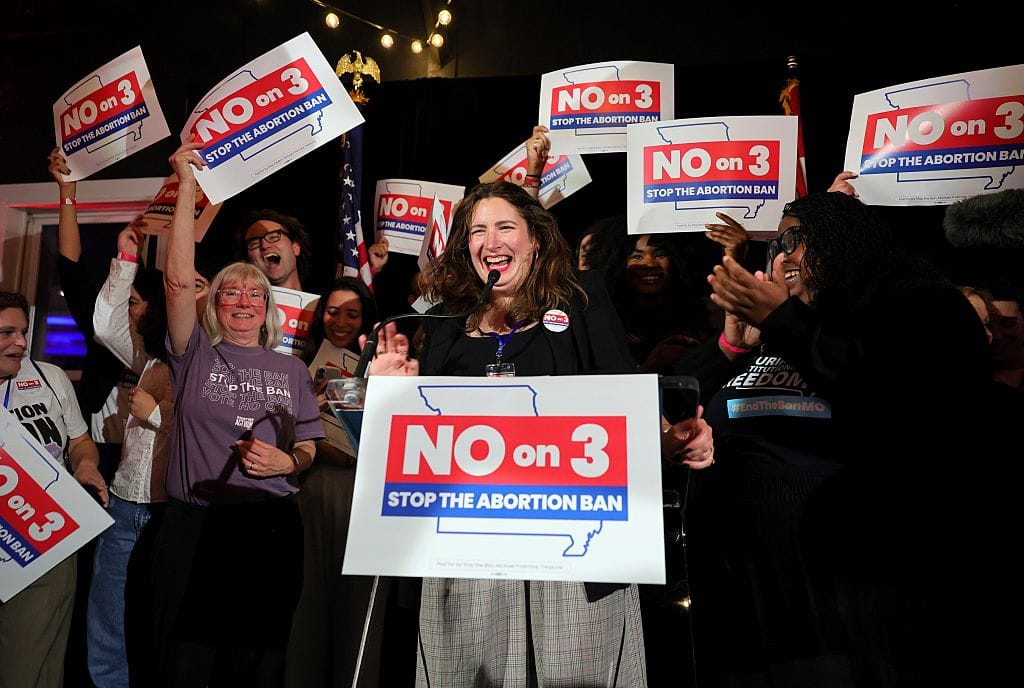
Voters in Arizona, Colorado, Nebraska, and Washington state decided to separate student athletes by their assigned sex at birth, banning trans children from participating in the sports teams aligned with their gender identity. In contrast, Vermont voters chose to expand the state constitution to include protections based on gender identity, and Missouri voters rejected a ban on gender-affirming medical care for minors, which was coupled with a proposal to repeal abortion rights.
In races for statewide and federal office, Republicans and the organizations supporting them spent an estimated $183 million on transgender-focused ads, mostly attacking Democratic candidates’ support of trans people. Most of the Democrats targeted by those ads, including Ohio Sen.-elect Sherrod Brown, Michigan Sen.-elect Abdul El-Sayed, Texas Gov.-elect Gina Hinojosa, and Texas Sen.-elect James Talarico, won their elections.
According to one analysis, Republican political action committees spent at least $78 million in the Texas Senate race on ads attacking James Talarico’s support of trans people—nearly half of his Republican opponent’s total ad spend. One anti-Talarico ad said he is “for they/them, not you,” echoing language used in ads against Kamala Harris in the 2024 presidential election. Another ad falsely claimed Talarico supported jailing parents who wouldn’t allow their children to physically transition.
The over $400 million that was spent on anti-trans ads did not in any way help them maintain power ... The scapegoat approach didn’t work. The fear-mongering and the misinformation didn’t work.
Mariah Moore, co-director of policy and programs at Transgender Law Center
“The over $400 million that was spent on anti-trans ads did not in any way help them maintain power,” Mariah Moore, co-director of policy and programs at Transgender Law Center, told Prism. “The scapegoat approach didn’t work. The fear-mongering and the misinformation didn’t work.”
Moore is hopeful and excited to build on the momentum of last week’s victories to codify existing protections and repeal harmful policies.
One likely reason the strategy failed against pro-trans candidates is that voters rank trans issues as unimportant compared to others. In a Navigator Research poll published in October, Democrats and Republicans ranked transgender issues last out of 20 issues, including inflation, jobs, healthcare, housing, and immigration.
Florida Gov. Ron DeSantis pointed to spending on trans-focused ads as a key reason for Republicans’ large losses, saying it was “not the issue motivating voters” and that it was a failed attempt to “scare Republicans to vote” but was “yesterday’s battle.”
“Fearmongering about transgender people is a losing strategy,” GLAAD President and CEO Sarah Kate Ellis said in a statement. “The fact is, anti-trans campaigns and candidates drove voters away.”
But Republicans were not the only ones to speak against trans rights as a way to try to win votes. Democrats in at least 17 states took anti-trans positions as well. The Democratic Congressional Campaign Committee, the official campaign arm of the Democratic Party in the House, sponsored an ad in South Carolina for Nancy Lacore’s U.S. House campaign saying she would “protect girls’ sports.”
Ohio Democrat Marcy Kaptur released an ad during her successful run for reelection to the U.S. House of Representatives that stated, “I voted with Republicans to keep transgender ideology out of our schools, because parents know what’s best for their kids.” The Kaptur campaign defended the ad after criticism from local LGBTQIA+ organizations.
Amy Acton, a Democrat who won her race for governor of Ohio, generally maintained support from Democrats despite her statement that she does “not support boys playing in girls’ sports.” Equality Ohio, a nonprofit that supports LGBTQIA+ rights in the state, changed its rating of Acton from an “A” to a “B.” Acton defeated Vivek Ramaswamy, who was scored an “F” for his support of banning gender-affirming care and referring to transgender identity as a “mental health disorder.”
LGBTQIA+ advocacy group, the Human Rights Campaign, declined to endorse Kaptur or Acton over their anti-trans stances.
Arienne Childrey, a former City Council member for St. Marys, Ohio, resigned as vicechair of the Ohio Democratic Party Pride Caucus after the group did not withdraw its support of Acton after her statement.
“I would much rather be known for standing up for my community—the trans community—than for being a good Democrat,” Childrey told Prism. “Regardless of the vote and the outcome, I want these candidates to know that there will be some form of accountability for throwing our community under the bus.”
Childrey says she would have been happy to see Kaptur lose because Democrats would have control of the House without her. She calls Kaptur’s anti-trans actions irredeemable and hopes she will have a challenger in the next primaries.
“I am a values voter,” Childrey said. “So ‘blue no matter who’ doesn’t work for me because my blue is based on my values.”
She added that while it’s common to have disagreements over policy in politics, “that is very, very different from human rights, which are foundational to people’s existence.”
“Putting a D behind your name will no longer serve as a signal to us that you back us,” Childrey said, referring to future political candidates. “We’re going to need more than that ... You’ve got to win us.”
While many candidates who support trans people won at the ballot box, trans rights were less accepted in more abstract ballot initiatives.
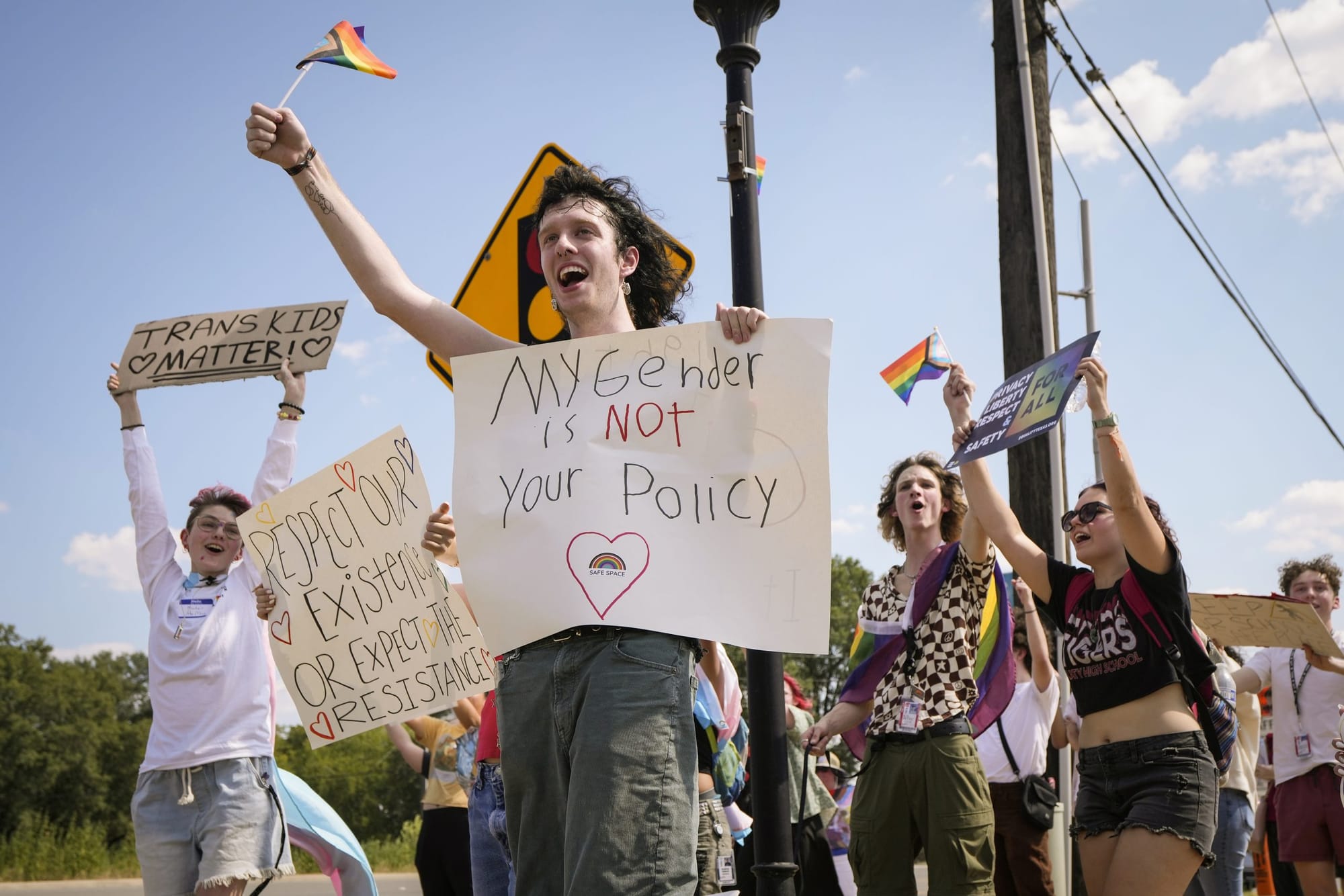
In the four states where anti-trans ballot measures won, the pushback began immediately. In Washington, groups have already filed suit to prevent Initiative 638 from taking effect. The initiative bans trans girls from playing girls’ sports in the state’s public schools and enforces this by requiring all girls to “verify” their “biological sex” in a “health examination” in order to play. The state Supreme Court will likely decide on the initiative’s constitutionality, as may happen in other states that passed anti-trans sports bans.
Meanwhile, trans candidates themselves made major gains in this election. Alabama, Georgia, Michigan, Washington, and Wisconsin elected their first transgender representatives to statewide office, and about a dozen other transgender candidates were reelected to their state-level positions. Jaelynn Scott became Washington’s first out trans state legislator and the first Black trans woman elected to any U.S. state legislature.
A letter from Gender Justice League, a Seattle-based trans advocacy organization, stated that Scott’s election on the same night as the passage of Initiative 638 indicates a lesson: “The people who know us are on our side. The problem is: most Washingtonians have never knowingly met a Trans person.”
Moore of the Transgender Law Center said voters now have an opportunity to hold elected officials accountable.
“Sometimes we’re not going to get the outcomes that we’re looking for … but that doesn’t mean we stop fighting,” Moore told Prism. “We’re going to continue this work to ensure that we’re building a better future for our community.”
Sarah Prager