‘Our olives look like gold’: How the genocide changed Gaza’s olive harvest
For many Palestinians, olives represent an inherited legacy. Israeli destruction keeps the people from their trees
Esraa Abo Qamar
Real journalists wrote and edited this (not AI). Independent, community-driven journalism survives because you back it. Donate to sustain Prism’s mission and the humans behind it.
Every year, when the olive season arrives in Gaza, my family wakes up early, roused by my youngest sister, who is the most excited of us all. We are not farmers, and we do not own a grove. What we have are two olive trees in our small, modest garden, right beside the house. But we insist on picking them ourselves, together, because for us the harvest has never been about how much we collect. It is about the day.
The season runs from October into November, when autumn is turning to winter and the mornings carry the first cold breeze. For Palestinians, olive trees are our culture and our roots, in the most literal sense. They were here before us, and they hold our grandparents’ names, stories, and habits. When we pick them, we are keeping that legacy alive. In Gaza today, that connection is under threat due to Israel’s mass destruction of the strip, including agricultural lands.
On Wednesday, the Israeli military rolled tanks over the “yellow line”—which demarcates about 70% of Gaza that is now under Israeli control—raiding the Nuseirat and Bureij refugee camps, firing indiscriminately, killing at least three Palestinians, and forcing thousands to flee. Even before the latest invasion, families with land beyond the yellow line can’t get to their trees, so the season passes them by completely.
For our small harvest, my grandmother comes from southern Gaza to pick with us. She gives the same instruction every year: Nobody starts until she is there.
When it’s finally time, my father climbs the ladder, and my brothers follow. He and my eldest brother always go to the highest rung to reach the top of the tree. My youngest sister never joins them. She is afraid of falling, so she stays below, close to the ladder.
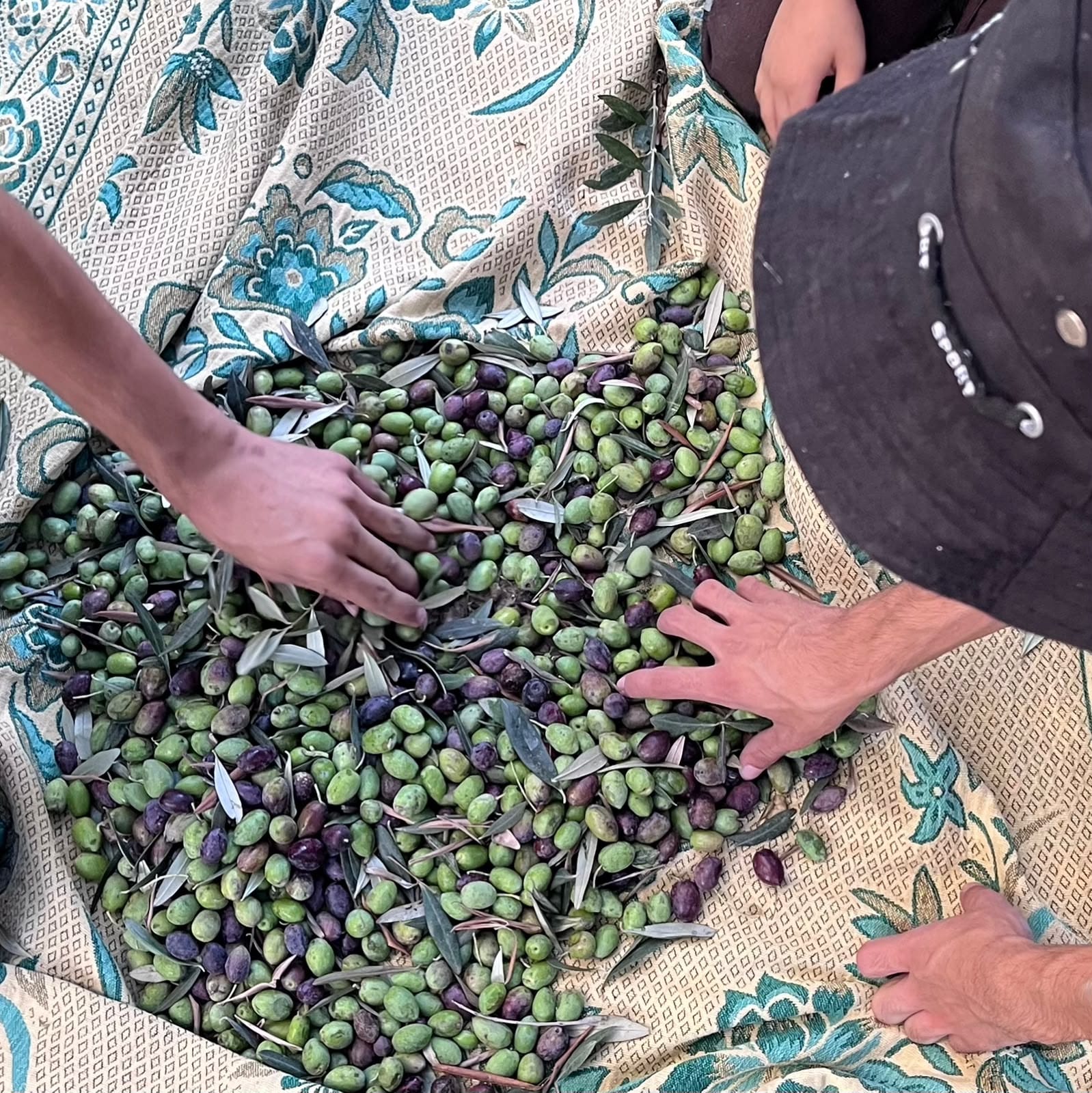
We spread a sheet on the ground, and one of my favorite parts of the day is the sound of the olives landing on it as they are thrown down from above. Soon, the garden smells of olive leaves. My brothers end up covered in dust, with leaves tangled in their hair and oil on their hands from the olives that split open.
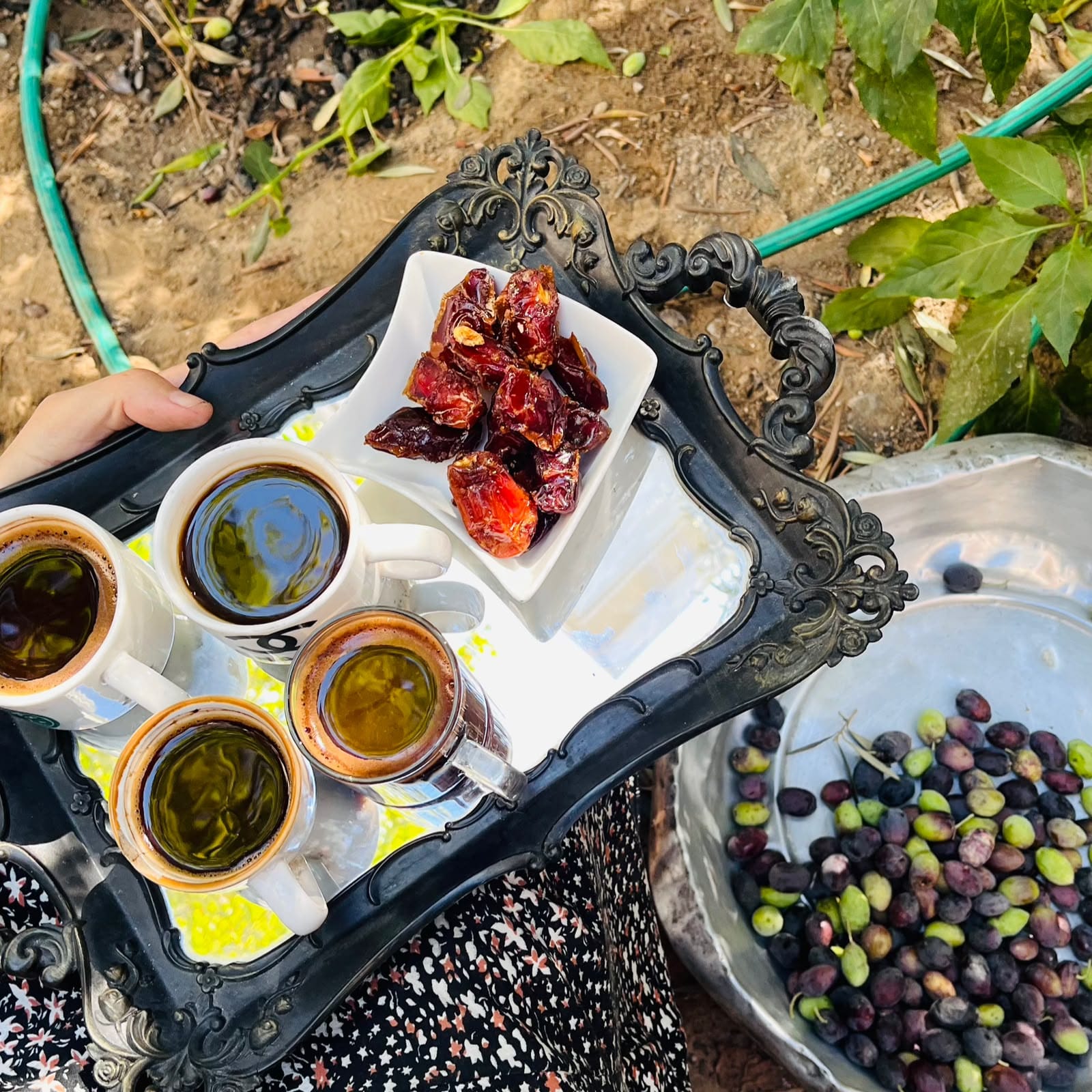
We used to make tea and coffee over a fire right there in the garden. Sitting among the trees made us want to light one, and since we did it rarely, it felt special. Now it is different. For three years, gas has been scarce in Gaza due to Israeli blockades, and we cook everything on fire. What was once a small pleasure has become a chore.
The war has changed parts of this ritual. Our trees stand in our own garden, so we can always reach them. Still, on the worst days, we are sometimes afraid to go down at all; an open space with drones overhead does not feel safe.
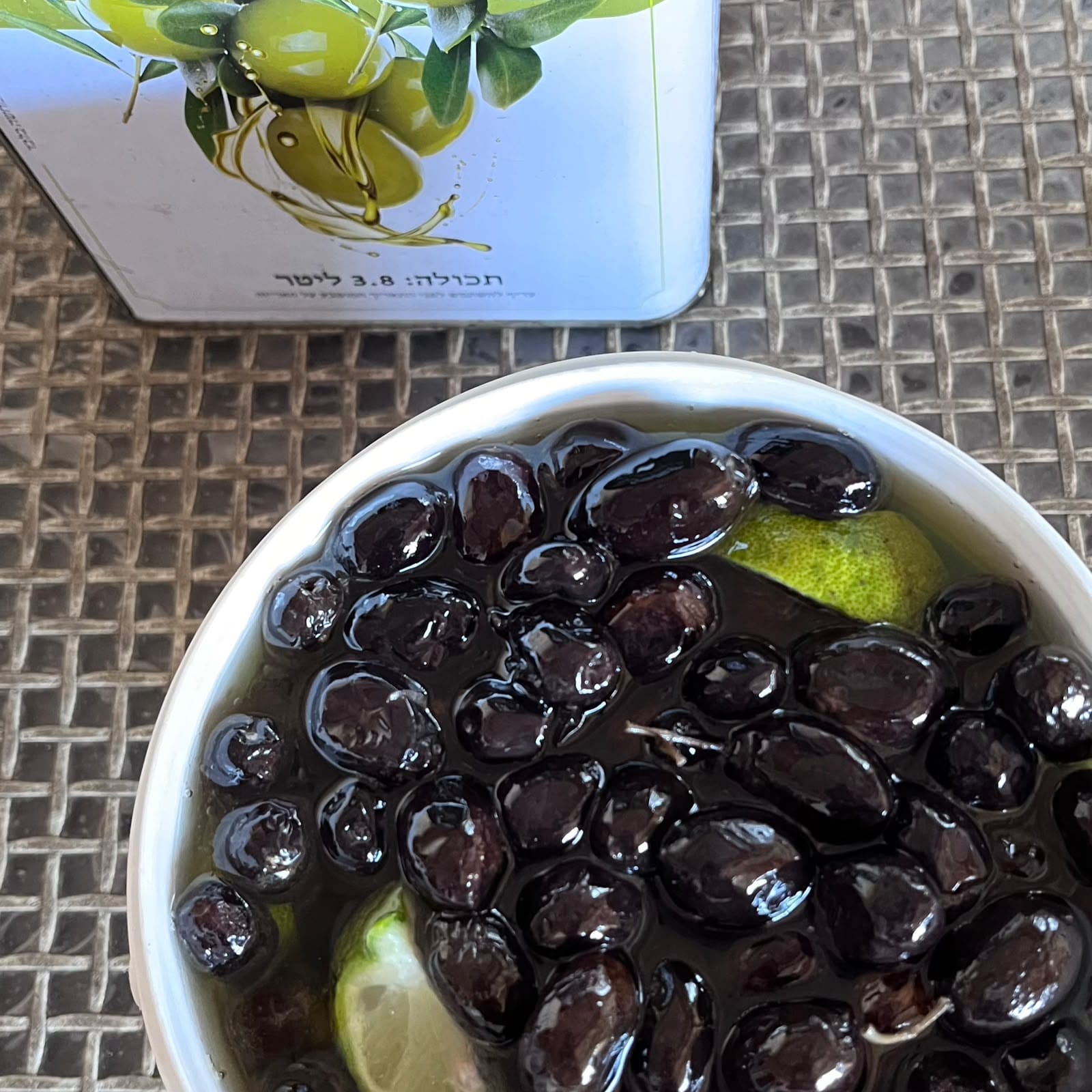
When the picking is done, my mother and grandmother separate the green olives from the black and crack them open. The green go into salt brine, and the black are submerged in olive oil itself, so their taste is rich and strong. Nothing beats the first breakfast of freshly picked olives. We eat them with red pepper, cheese, toasted bread, and tea, and the whole family sits together at the table for a long time.
Two trees make a small harvest, but it is one many people in Gaza no longer have. Hajja Mai Abu Mlouh, who is 90, remembers what a full harvest once looked like.
Her family’s orchard was full of olive trees, many of them very old. Her grandparents planted them, her parents inherited them, and she passed them on to her own children.
“The tree gave to everyone in the family,” Abu Mlouh said. “Nobody was left without a share.”
When the war came, the olives fell to the ground before anyone could gather them. “We lost so much,” she said. Then the trees themselves went. “They bulldozed everything. Today you can’t find a single tree standing.”
Before the war, olives fed Abu Mlouh’s household all year. They ate them, cooked with the oil, and sold what was left. The season is tied to the table in other ways too: from musakhan—the Palestinian dish famous for how much oil goes into it—to the simple breakfast of zaatar and olive oil. During the famine forced by Israeli restrictions on food imports to Gaza, Abu Mlouh said the trees were what kept the family on its feet.
The oil was never only food. In her home, it was also medicine. During the war, when the bombing left children and adults alike frozen with fear, the family massaged their hands and feet with warm olive oil, a basic remedy to help ease their stiffness.
Abu Mlouh said she knows her own oil by its smell and strong taste. Market oil, she said, is often watered down or mixed with cheaper oils. “Our olives look like gold,” she said.
Gaza’s Ministry of Agriculture said about 9,880 of the 11,120 acres planted with olive trees before the war have been damaged, and production has fallen from about 44,000 tons to less than 3,600 this season. The United Nations Office for the Coordination of Humanitarian Affairs recorded that working olive presses fell from 37 to four by early 2025.
Abu Mlouh’s family owns a press, but the area around it is under Israeli control—in the so-called yellow line—and no one can reach it. Even if they could, there is no fuel or gas to run it. Pressing was always costly, and oil now sells at prices she called unimaginable. “Today we pay for our oil with our blood,” she said.
This year there was no real harvest. “We didn’t see the season, and we didn’t live it,” Abu Mlouh said. The season is also marked by who is missing. Many of the people she loved were killed or detained. “Part of us went with them,” she said. Whole families have been wiped out.
“You raise [a tree], water it, and care for it until it bears fruit, and then you leave it to your children ... I pray our trees live, and that our land fills with them again.”
Hajja Mai Abu Mlouh, a 90-year-old Gaza resident
To Abu Mlouh, a tree is like a child. “You raise it, water it, and care for it until it bears fruit, and then you leave it to your children,” she said. The harvest felt like picking gold, and it was what brought everyone together. Her wish now is simple: “I pray our trees live, and that our land fills with them again. The smell of olives is the smell of our ancestors and our heritage.”
Esraa Abo Qamar