‘Our common bond’: Children of incarcerated parents find community at California summer camp
Project Avary has brought together hundreds of children of incarcerated parents to feel less alone

Victoria Valenzuela
Real journalists wrote and edited this (not AI). Independent, community-driven journalism survives because you back it. Donate to sustain Prism’s mission and the humans behind it.
“Who likes pizza?”
“Who likes ice cream?”
“Who has a parent that has been incarcerated, detained, or deported?”
Hands from each of the two-dozen attendees from 8-year-olds to those in their 20s, shot up. They were all sitting bundled in blankets around a fire pit when they responded to the camp counselor’s question.
“My dad.”
“My dad.”
“My mom.”
“My dad and brother.”
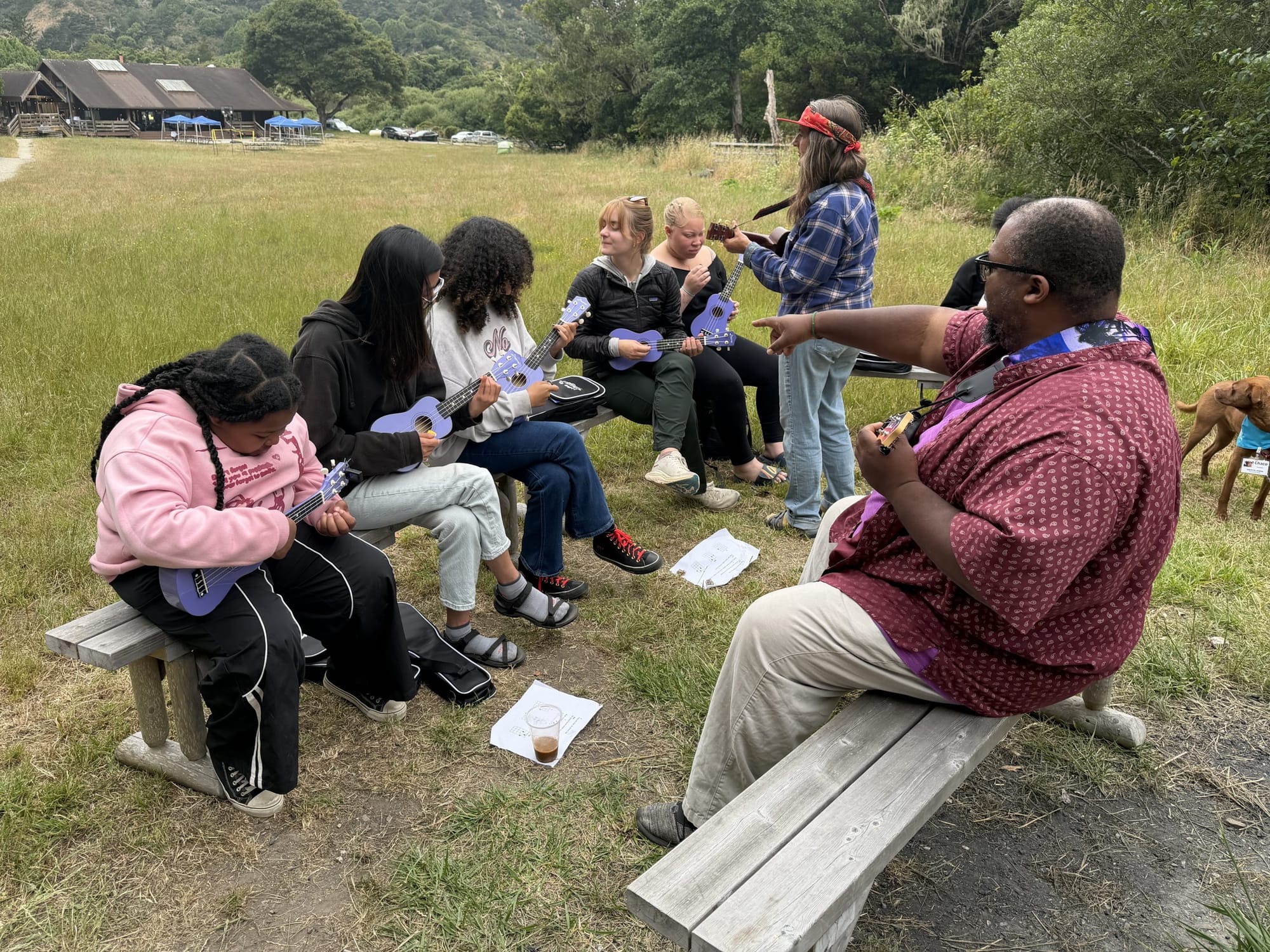
On a chilly July night, the group at Project Avary’s summer camp for children of incarcerated parents passed a wooden talking stick around the circle in northern California. Some children shed tears while telling their stories, and others cried in solidarity and recognition. For some, it was the first time they’d ever spoken about their parents’ incarceration, outside of their families. For others, it was still too painful to share.
“We call it our common bond,” said Aliana Escalante, 16, who has been attending the free camp every year since she was 9 and is now a junior counselor.
Many of the more than 2 million children in the U.S. who have an incarcerated parent feel shame or as if they’ve had to keep their experiences secret because no one else would understand, which takes a toll on their mental health. But with Project Avary, children from around the country have a space just to be themselves. There, they hike in the mountains; play at the beach; learn improv, music, boogie boarding, and archery; and most importantly, bond with other children in the same situation.

When Escalante’s father went to prison when she was 6 years old, the self-professed daddy’s girl felt a big loss. She didn’t tell anyone at school because she didn’t think they would understand.
“I feel like that was eating me inside because it was a big part of my life and who I am,” Escalante said. “Once I found Avary, I felt like I was not the only one.”
Michelle Carcamo, 23, another Avary participant who is now counselor, felt the same way. Her father went to jail when she was 5. Classmates would ask why he never picked her up from school. Carcamo was scared to tell the truth, so she lied.
Then she went to the camp as a teenager and heard her own story echoed by other attendees.
“I’d cry with them because, me too,” Carcamo said. “I thought I was the only one. Just being able to hear it and name it, that we’re going through these things, like, ‘Hey, I’ve also gone through that, you’re not alone.’ That is so powerful.”
Changing lives through generations
Project Avary, which reaches about 150 children of incarcerated parents with its summer camp each year, started in 1999 when a chaplain at San Quentin State Prison noticed that many of the children visiting their fathers would later end up in prison too. While there were programs inside for incarcerated people, he noticed there was a lack of support for families, who are often referred to as the “hidden victims” of the criminal justice system. Today, the organization takes pride in a 94% success rate of keeping its alumni away from the criminal legal system as adults after thousands of youth have cycled through its program. According to the group’s website, 95% of Avary youth reported feeling a sense of belonging with their peers, 92% showed positive change in self esteem, and 90% showed positive change in perseverance.
“Living in isolation can cause a lot of stress in their bodies. They’re not able to focus at school, and grades go down, [they have] behavior issues, things like that,” said Claudia Muñoz, program director at Project Avary. “It’s important to bring children that have that same experience together to not only be in community, but to really feel that they’re not the only one experiencing this.”
Most Project Avary alumni grow up to become camp counselors themselves and mentor the next generation.

Cesar Paez got involved with Project Avary at 8 years old. His father has been incarcerated all his life, so when he’d see other fathers and sons out together, he’d always feel alone. But in a room filled with other people who shared his experience, for the first time he didn’t feel “like an alien.”
Paez remembered his first summer camp with Project Avary. He was nervous and shy. Then one of the counselors called him to play basketball with the other children, and Paez started coming out of his shell and bonding with others.
“They embraced me, my goofiness, my silliness, my sadness, and a little bit of everything,” Paez said.
The camp also gave him male role models.
He continued with Project Avary, working his way through the ranks to become a leader and counselor. Now, he works alongside the counselor who first invited him to play basketball.
Paez also mentors teenagers like Hezekiah Smith who are growing up the same way he did.
Smith, 16, said he doesn’t feel like he can talk to some of his friends at school about his father’s incarceration as deeply as he can with the friends he has made at the summer camp, which he has attended since age 7. Smith said the teenagers bonded deeply and made a group chat to stay in touch. Whenever somebody is going through something, they get on a call.
Like Paez, the summer camp gave Smith mentors and male role models.
“It was really hard because I never had a father figure, and everybody else had a dad,” Smith said. “The [camp] counselors just gave me that male figure.”
A growing found family
Not every child who could benefit from the summer camp gets to attend. Muñoz said that the largest barrier the organization faces is the stigma around incarceration and building trust with families. Some families, she said, might feel hesitant to reach out for support.
“There are caregivers that still feel that need to hide that and therefore, a program like Project Avery is just not an option because nobody knows what’s going on with them,” Muñoz said.
Even in her own family growing up, she said her brother’s incarceration was a secret, but that caused further isolation.

Still, as each year passes, the “Avary family” continues to grow. As alumni go to college, find full-time jobs, and have families of their own, many return to camp every summer to continue reflecting on their common bond.
“All the cards were stacked against me, and I broke the cycle. Now here I am giving back to the community that was once there for me,” Paez said. “I got to be there for the next generation, to give them that love and comfort, that you are not alone.”
Editorial Team:
Sahar Fatima, Lead Editor
Lara Witt, Top Editor
Stephanie Harris, Copy Editor
Victoria Valenzuela