Filed Under:
Never eat the candy on your pillow: reentry politics
Your circumstances rarely change with reentry no matter who’s president, and it’s easy to forget that there is power in the political—power that you can wield for your community
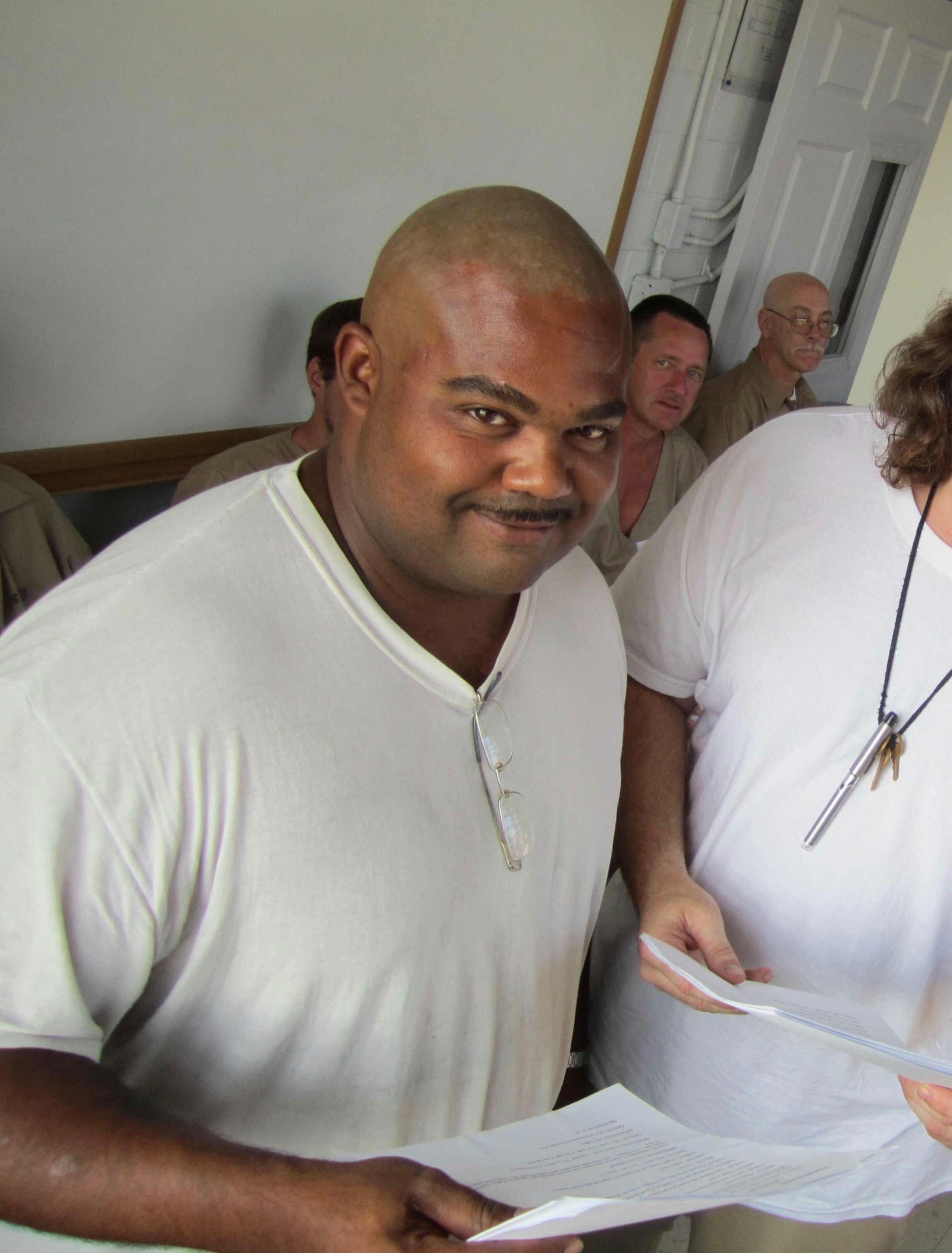
Derek R. Trumbo, Sr.
Real journalists wrote and edited this (not AI). Independent, community-driven journalism survives because you back it. Donate to sustain Prism’s mission and the humans behind it.
Dear Reader,
I never wanted to get involved with politics, mainly because it hardly seemed to affect my life—especially once I was incarcerated. No matter who was in office, it felt as though my situation remained the same. In retrospect, it’s clear this isn’t exactly true. For example, in 2015 the Obama administration rescinded a Clinton-era policy that ended Second Chance Pell Grants for incarcerated people. This expanded higher education and made it more accessible to people inside—something I benefited from greatly. The policy change allowed me to obtain an associate degree from Simmons College of Kentucky while I was incarcerated. Still, I refrained from being political or talking politics inside—mostly because I failed to see the parallels between my life and the political landscape that had so much control over my circumstances behind bars.
Last year when I was released from prison after almost 20 years, I entered a significantly changed world. By that I don’t just mean the culture shock I previously wrote about when first confronted with digital billboards, futuristic-looking cars, and a public seemingly glued to their phone screens. More specifically, I’m referring to Donald Trump being president and how disconcerting it has been to constantly see him in the news acting like an internet troll who wields his authority like a child throwing a tantrum. This is the man holding the nuclear codes! Considering the many years I spent in prison, I have long known what many Americans are now finding to be true under the current administration: Our freedoms are an illusion. However, I am just now learning what many of you likely already know: there is power in working together.
There is still a part of me that wavers on being overtly political. As I continue to deal with the trauma of reentry, I guess I have it in my head that even engaging in free speech can send me back to prison. But everywhere I look, the people around me, even in my newfound freedom, are affected by the policies of the current administration. People of color are unjustly losing their livelihoods, and queer and trans people are villainized and being stripped of gender-affirming care. Latinx friends are afraid to go to work because leaving the house means risking detainment. Someone close to me lost nearly half of her income when the arts nonprofit she worked for lost its National Endowment for the Arts funding. These realities feel like a slap to the face—not just to me, but to everyone affected.
As outraged as I feel, I don’t always know my role. I still have an aversion to politics, and I can’t vote due to my record. But I recently got a reminder that engaging in politics is about more than picking a side and casting a ballot.
During a recent church service, the parish priest spoke about “the work” in front of us as the current administration rolls back our rights as if the Constitution didn’t exist. The priest said, “The work is whatever is in front of you.” It was then that I began to see politics differently.
The way I choose to fight against the authoritarianism and lawlessness of the Trump administration is to love and care for the people around me.
At its core, politics are about people and ideally, they are also about elected officials working for the good of the people. After all, the U.S. Capitol, where Congress meets, is called “the People’s House”—or at least it used to be. I have come to realize that we can be political in different ways. The way I choose to fight against the authoritarianism and lawlessness of the Trump administration is to love and care for the people around me.
On Sunday mornings before church services, I feed the hungry. Some people are unhoused, some are veterans, some are simply food-insecure. This was where my “work,” as the priest called it, started. It is a small thing, but one that afforded me a different perspective on all that I can do. Each hungry mouth tells a story about how drastically their lives are changing under the mounting pressures caused by the Trump administration. Every person expresses how tenuous their hold on normalcy and peace now feels.
As I hand out eggs, biscuits and gravy, and coffee on these cold Sunday mornings, I now see that every act of kindness is a small rebellion against indifference: a way to reclaim some measure of dignity, both for myself and for those I serve.
The faces of those who come to eat speak volumes: the mother clutching her child’s hand with tired determination, an elderly man with shaking hands trying to stay warm, the young veteran who wavers between pride and pain. Their stories weave together into a tapestry of resilience and heartbreak, a living reminder of how easily stability slips away and how the smallest gestures can help restore hope.
It is during moments of service that I recognize how deeply our fates are intertwined. Politics are not some distant, abstract force, but rather the cumulative impact of choices made by people in power—choices that shape the contours of our daily lives. The lines between policy and reality now blur before me: Hunger is not a statistic but a person’s empty plate; unemployment isn’t just a number but the ache in a father’s heart as he searches for work. Every serving of food, every exchange of words over a cup of coffee, is charged with the weight of all that is being lost and all that might one day be reclaimed.
And I am reclaiming politics. Because I can no longer afford to believe that I am powerless or that I cannot enact change on my own.
When the government shut down and the Trump administration announced cuts to the Supplemental Nutrition Assistance Program and other benefits, my fiancé and I were forced to have difficult talks about the future in front of us and the challenges others would face. We also thought about what we could do as writers. Could we effect change? We decided to ask our writer friends to participate in a benefit for people experiencing food insecurity. We organized a night of readings called “Feed the Need” that took place on Dec. 13 and included Kentucky Poet Laureate Frank X Walker and writers Chris Helvey, Deidra White, Renee Rigdon, Katerina Stoykova, and myself. Each participant read work that explored how hunger has shaped our character and what it’s like to grow up in poverty and affected by food apartheid. We raised nearly $1,000 and the proceeds went to Simon House, a nonprofit organization and emergency shelter that specializes in helping single mothers in crisis. This, too, is politics at work.
And so, I’m going to keep showing up, week after week, because this simple act—of being present and bearing witness—feels like the truest form of resistance I can offer. While I might not have the power to change unjust policies or restore funding with a signature, I can still choose compassion. I can choose to honor the humanity of those whose voices are drowned out by the noise of what the media calls “politics.” I can stand with the people being left behind— not as a savior, but as a fellow traveler, stumbling along the same uncertain road.
With each new day, the barriers I built against politics crumble a little more. I now understand that my involvement is not a choice, but a necessity. To remain silent is to consent to the suffering of others. My reluctance is fading, replaced by a quiet conviction: that love, when practiced deliberately, is a political act. It is in these moments that I find purpose—not in grand gestures or headlines, but in the gentle persistence of kindness, in the courage to care when the world says not to bother. My “political” journey has only just begun, but I vow never again to underestimate the power of showing up, of feeding the hungry, of bearing witness, and of loving without reservation.
The Right to Write (R2W) project is an editorial initiative where Prism works with incarcerated writers to share their reporting and perspectives across our verticals and coverage areas. Learn more about R2W and how to pitch here.
Editorial Team:
Tina Vasquez, Lead Editor
Lara Witt, Top Editor
Rashmee Kumar, Copy Editor
Derek R. Trumbo, Sr.
Filed Under: