Filed Under:
Under RFK Jr.’s leadership, ‘MAHA’ obliterates public health
As head of Health and Human Services, Robert F. Kennedy Jr. has made massive cuts to public health and spread dangerous disinformation—all under the guise of “making America healthy again”
Laura Weiss
Real journalists wrote and edited this (not AI). Independent, community-driven journalism survives because you back it. Donate to sustain Prism’s mission and the humans behind it.
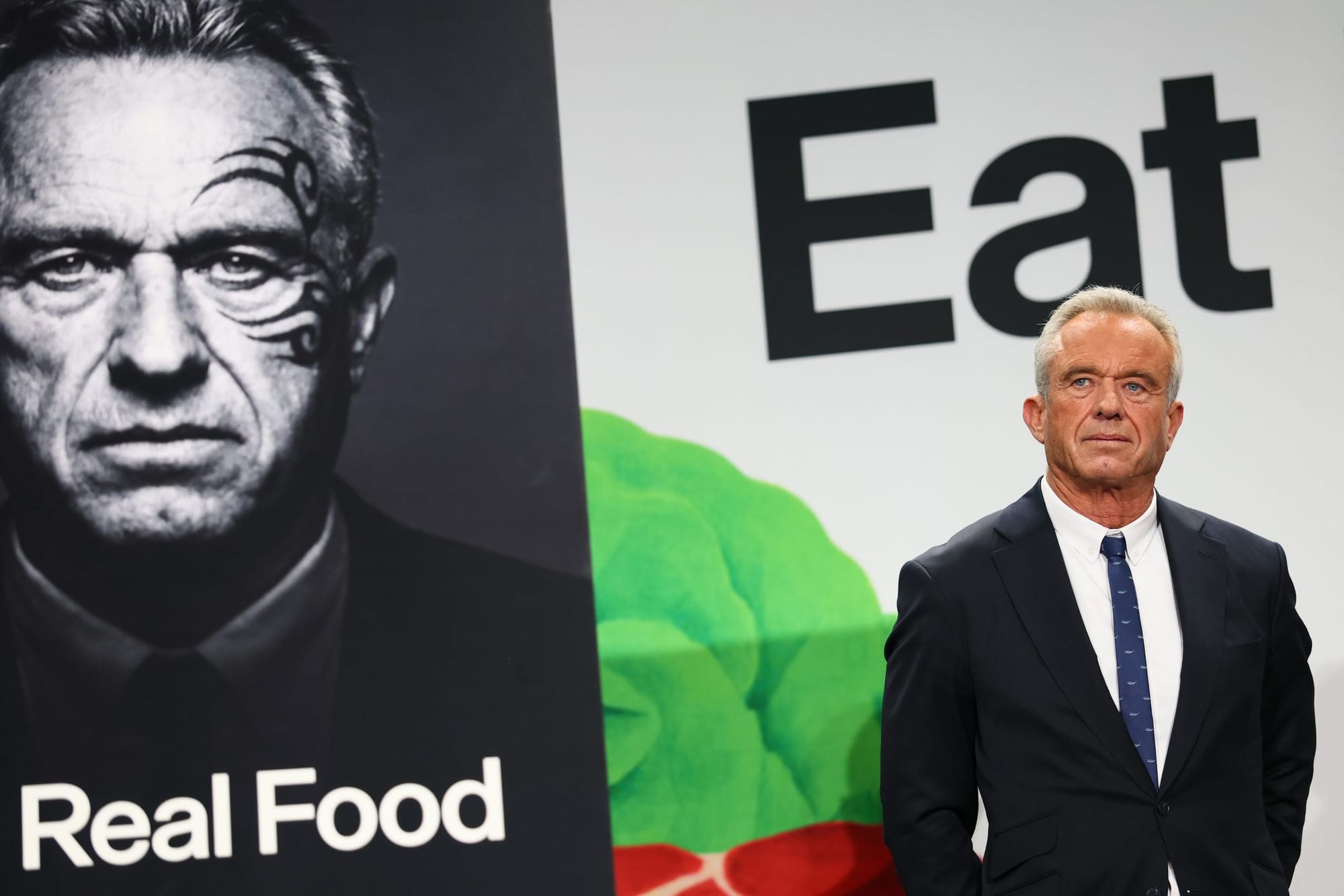
In his role as secretary of the Department of Health and Human Services (HHS), Robert F. Kennedy Jr. has made tremendous strides to destroy public health in the U.S.
From massive cuts to vaccine and cancer research and Centers for Disease Control and Prevention (CDC) staffing to stacking HHS with his own anti-vaccine cronies and countless harmful and fictitious claims about autism, Kennedy’s actions have left the U.S. vulnerable to pandemic threats, previously eradicated diseases such as measles and polio, dangerous unproven treatments, and widespread confusion about medical guidance.
Despite his promise to “Make America Healthy Again,” Kennedy’s actions coincide with historic cuts to Medicaid, Medicare, the Supplemental Nutrition Assistance Program (SNAP), and threats to disability rights and services as part of President Donald Trump’s reconciliation bill.
Taken together, the undoing of the country’s already inadequate social safety net and the values of the so-called MAHA movement represent a revanchist move toward a new kind of social Darwinism that many advocates have likened to eugenics.
To better understand how the U.S. got here, and the damage already done by Kennedy in his first year at HHS, it’s important to look closely at the ethos that drives MAHA. Public health experts and scientists say it is a movement eager to find scapegoats in vaccines and specific populations of people, and one hungry for easy solutions to complex issues such as the failing health care system and how to care for those diagnosed with autism. The HHS secretary’s misleading public messaging also successfully plays into racist, ableist histories and popular tropes of American individualism, according to disability justice advocates.
Of particular note, when charting MAHA’s rise to power, is the role played by COVID-19 backlash.
Understanding MAHA
When thinking about the rise of MAHA, there’s no ignoring the role of the COVID-19 pandemic.
When the pandemic broke out in 2020, many contrarians who now hold top roles in government, such as disgraced economist Jay Bhattacharya and anti-science hematologist-oncologist Vinay Prasad, capitalized on the government’s disastrous early response.
As Dr. Jonathan Howard has extensively documented in his book “Everyone Else Is Lying to You,” these figures made names for themselves by downplaying the seriousness of COVID-19 and framing evidence-based mitigation strategies, such as shelter in place and masking and vaccination requirements, as affronts to personal freedom. As the science, research, and recommendations surrounding COVID shifted over time, trust in public health eroded—thanks in no small part to these dissenting voices.
But while officials on both sides of the aisle have fallen into a sort of amnesia about COVID and its long-term impacts, Kennedy and his allies have refused to forget early vaccine policy.
Now, these “Covid contrarians” are on a “revenge tour,” said Jessica Malaty Rivera, an epidemiologist and member of Defend Public Health, a network of public health researchers, healthcare workers, and advocates fighting for science-based public health policies under the Trump administration.
“The MAHA movement is desperate to basically lure the public into thinking that they’re the good guys, [and] that ‘establishment science’ and ‘establishment public health’ are a bunch of oppressors and totalitarians,” she explained.
By pushing this revisionist history, the MAHA movement largely glosses over the real toll of COVID-19 in causing more than 1.2 million deaths in the U.S. alone, and the role that the vaccines played in preventing millions more deaths and lessening its current threat, Malaty Rivera added.
More recently, Kennedy reportedly convened a secret group to investigate so-called vaccine injuries and long COVID, citing a report by known vaccine skeptic Retsef Levi, who is not a medical doctor and previously served as an intelligence officer of the elite Israeli Intelligence Corps. Levi is known for using cherry-picked, alarmist data to argue against the use of vaccines.
While more funding and research of long COVID is needed, Malaty Rivera told Prism that the initiative feels like another thinly veiled effort to take aim at vaccines.
We’re going to see more Black and brown bodies that are going to suffer from disease and death for no reason.
Jessica Malaty Rivera, epidemiologist
After all, MAHA is a movement that mocks people for wearing masks and is part of an administration that is actively trying to take health care away from disabled and poor people, experts say. According to Malaty Rivera, the end result of these efforts is already clear. “We’re going to see more Black and brown bodies that are going to suffer from disease and death for no reason,” she said.
Still, MAHA appeals to a broad segment of the public. According to a KFF/Washington Post poll taken last year of 2,716 parents and legal guardians, around 38% identified as supporters of the MAHA movement. It’s important to note that the results closely correlated with the Republican political affiliation; only 1 in 6 self-identified Democrats said they agreed with MAHA.
While the Trump administration’s Make America Great Again (MAGA) base has enabled the anti-science, anti-medical movement’s rise to the highest echelons of government power, Kennedy’s anti-vaccine, pseudoscience crusade long predates the Trump presidency. It was largely through Kennedy’s controversial appointment as head of HHS, as well as the high-level positions held by Bhattacharya and disgraced physician and peddler of junk science Dr. Mehmet Oz, that the two movements came together.
Beyond its central tenet of vaccine skepticism, MAHA is not easy to define, in part due to the movement’s many contradictions, often pairing seemingly reasonable hypotheses with anti-science, conspiracy-theory laced proposals.
For example, The MAHA Report, released in February, cites ample data to support the claims that poor diet, exposure to environmental chemicals, lack of exercise, and chronic stress are key concerns facing children’s health. But the report also names over-medicalization as a central threat and implicitly blames people with chronic health conditions for driving “90% of medical costs in the United States.” While this CDC statistic may be true, the report suggests that diet alone could reverse the burden of chronic disease, ignoring genetic factors and access to health care.
MAHA represents longstanding ideas that “being ‘well’ is sufficient against diseases, and then medicines, actually, are things to be avoided,” said Dan Vergano, a senior editor for Scientific American, said on an episode of the magazine’s podcast. “Eating the right food, doing the right exercise, living a healthy life is enough to sort of be healthy, and this other stuff is suspicious—medicines and so forth.”
Kennedy was not always like this. As journalist Michael Scherer recounted in The Atlantic, as an environmental lawyer, he described himself as a “FDR/Kennedy liberal,” and he crusaded against corporate polluters who contaminated waterways. A 1999 Time magazine cover story called him a “hero of the planet.”
Kennedy previously condemned Donald Trump, but after a failed run for president in 2024, he began meeting with the president-elect, along with Bhattacharya and Oz at Oz’s compound in Florida, and found them open to his anti-vaccine ideas. Since then, Kennedy has referred to Trump as a “populist who is standing up to really entrenched power and the deep state,” according to The Atlantic.
While MAHA claims it is “aimed at restoring public trust,” as the science writer David Wallace-Wells wrote for The New York Times earlier this year, trust in public health is far lower than it was before Kennedy took the helm of HHS. And while the movements are occasionally at odds, if there is something that ties MAGA and MAHA together, it is how eagerly both spread misinformation.
So why do so many people believe them?
The myriad lies that Kennedy and his allies use are often presented in a kind of “word salad” that makes what they say initially sound reasonable, explained Malaty Rivera. For example, Kennedy and his allies claim not to be anti-vaccine, while at the same time casting doubt on vaccine safety. At his confirmation hearing, for example, Kennedy said, “News reports have claimed that I am anti-vaccine or anti-industry. … I am neither; I am pro-safety.”
The MAHA movement pairs seemingly reasonable concerns, such as ultra-processed foods, with changing the food pyramid to emphasize eating red meat and whole milk, which contain saturated fats that research shows is unhealthy in large quantities. Or, as another example, Kennedy has criticized Big Pharma while stacking committees with people who have egregious conflicts of interest. Kennedy has also rightly identified environmental factors as threats to health, while blaming airborne chemicals for causing gender dysphoria.
“They’re able to penetrate so many communities and lure many people who would not even identify as Republicans into the MAHA movement because of how they use doublespeak,” said Malaty Rivera.
MAHA has also capitalized on social media, piggybacking off the wellness industry, while claiming to fight Big Pharma and medical corruption. On TikTok and Instagram, the rise of wellness influencers with no real expertise also aids in the spread of health misinformation that appears credible and appeals to many demographics.
With health care growing ever more expensive and less accessible, people are frustrated, mistrustful of the medical establishment, and looking for easy solutions to their health problems.
“At least some of the allure of MAHA reflects a genuine crisis and entirely understandable frustration,” wrote Irish science writer David Robert Grimes in the scientific journal EMBO Reports. “But … instead of recognising the systemic inequalities and structural factors, MAHA instead hunts for ‘toxin’ scapegoats on which to pin blame: vaccines, fluoride, 5G, seed oils. Instead of recognising that the profit-driven nature of U.S. healthcare is a problem, they instead hawk individualistic and ineffective solutions.”
Indeed, MAHA deals in all-American tropes such as the “rugged individual” that, when taken to an extreme, blames individual behavior for health problems while totally sidelining systemic factors, experts say.
This kind of ideology isn’t new, said Mia Ives-Rublee, senior director for the Disability Justice Initiative at the Center for American Progress. “You see the idolization of the cowboy. You see the idolization of the word ‘independence.’ Our society is really built on personal responsibility,” she said.
This was echoed by Malaty Rivera, who told Prism that social determinants of health are “just kind of ignored” by the MAHA movement.
MAHA followers deny “the fact that there are issues like food deserts and disparate access to health care and disparate access to health insurance and disparate access to public health information or transportation to public health places,” she said.
The language Kennedy uses to describe people with disabilities or chronic health conditions is also deeply stigmatizing, said Zoe Gross, director of advocacy at the Autistic Self Advocacy Network.
In just one example, Kennedy falsely stated that autistic kids “will never pay taxes, they’ll never hold a job.” According to the HHS secretary, their only value is their ability to work.
“I think that we can trace this [movement] back to the very founding of the United States and the belief that you are only worth the amount that you are able to produce,” said Ives-Rublee.
To this point, the massive Medicaid cuts that will go into effect later this year impose new rules that require recipients to work at least 20 hours per week to remain eligible for Medicaid. Though people with disabilities can apply for work exemptions, increased red tape and new eligibility and recertification requirements will lead to more uninsured, less healthy people. Meanwhile, the end of enhanced subsidies for high health care premiums will make insurance unaffordable to millions more.
Oz, the administrator of the Centers for Medicare and Medicaid Services, told Fox Business last summer that people must “prove that you matter” in order to receive health care.
In the MAHA movement, there appears to be a pervasive belief that if “you need services that you’re not getting, that’s your fault for having a disability,” Gross told Prism.
Ives-Rublee said the message that disabled or unhealthy people are unworthy and undesirable harkens back to the so-called Ugly Laws, which targeted disabled people in public spaces and funneled many into institutions.
According to Malaty Rivera, “We’re going back to almost a survival of the fittest mentality.”
“It’s deeply eugenicist,” she added. “And I know that people say that word a lot, but it really is.”
An obsession with childhood vaccines and autism
Kennedy’s approach of sidelining structural factors and blaming individuals for their health outcomes is best demonstrated by the way he talks about the rise in autism. The HHS secretary routinely blames parents for rates of autism, which he links to childhood vaccinations and the use of Tylenol and antidepressants.
Kennedy’s obsession with vaccines began when mothers of autistic children began showing up to his talks, and one convinced him to read a paper about the links between autism and vaccines, according to The Atlantic. Since then, he has been the face of the anti-vaccine movement in the U.S.
The claim that vaccines cause autism, while long discredited, is a central talking point in the MAHA movement. The reported rise in autism rates in recent decades is actually due to better testing methods, Gross explained.
But this fact hasn’t deterred Kennedy’s fixation on the subject. Under his leadership, concerns have grown that HHS can no longer be trusted for accurate and accessible information.
For example, before MAHA took over HHS, the CDC website stated that “vaccines do not cause autism.” Then, last November, the page was updated to feature a confusing contradiction. The top of the page now reads, “The claim ‘vaccines do not cause autism’ is not an evidence-based claim because studies have not ruled out the possibility that infant vaccines cause autism.” The sub-headline, “Vaccines Do Not Cause Autism,” remains, though it contains a large asterisk that leads to a disclaimer.
The hard-to-follow back-and-forth on the page is a microcosm of the chaotic, wildly confusing battle between evidence and pseudoscience that has underpinned the last year of public health policy, experts say.
In another example from earlier this year, Kennedy moved the previously universally recommended rotavirus, COVID-19, Influenza, Hepatitis A and B, and meningococcal vaccines to a category called “shared clinical decision-making.” The category appears to suggest that parents should discuss with their clinician whether their children should receive these vaccines. But Kennedy’s action is more sinister than it first appears, said Malaty Rivera.
For one, the new category suggests that vaccines were previously given without parental consent, which is untrue. This change also casts doubt on vaccines’ efficacy and safety, while at the same time unnecessarily adding to the responsibilities of already overworked doctors. Removing vaccines from the “recommended” category also empowers insurance companies to no longer cover them. Millions of children could “lose free access to one of the best public health interventions that we’ve ever had,” said Malaty Rivera.
As a result, leading medical associations were forced to make their own recommendations to uphold the previous vaccine guidance, and at least 27 states and Washington, D.C., have done the same.
Even before the pandemic, the World Health Organization listed vaccine hesitancy as among the top 10 threats to public health. It should come as no surprise then that over the last six years, childhood vaccination rates have been on a steady decline.
MAHA under fire?
While it may seem there’s no stopping Kennedy’s dangerous efforts to mainstream conspiracy theories and junk science, HHS faced a major setback when, on March 16, a federal judge ruled against the department as part of a lawsuit put forth by the American Academy of Pediatrics.
The case stems from an incident last June. Days before the CDC’s Advisory Committee on Immunization Practices (ACIP) was scheduled to meet, Kennedy fired all the existing experts on the vaccine advisory panel. The HHS secretary subsequently stacked the panel with a group of largely vaccine-skeptical members, such as Levi, who had no real expertise in the subject matter. Then, in January, Kennedy unilaterally changed the childhood vaccine schedule to remove the number of recommended vaccines from 17 to 11, while also moving the universally recommended childhood vaccines to the shared clinical decision-making category.
The judge’s March ruling invalidated Kennedy’s actions for not following procedure, characterizing his efforts as “capricious and arbitrary.” The ruling also vacated the new makeup of ACIP, and any decisions the panel has made since. This includes the panel’s restrictions on the COVID-19 vaccine and the decision to move childhood vaccines to the clinical decision-making category.
I think that the mission to Make America Healthy should be grounded in sound science and process, not wellness vibes, distortion, and self-interest.
Demetre Daskalakis, former CDC official
Though the future of ACIP remains unclear, the judge’s ruling remains one of the biggest challenges to MAHA yet. In a statement to Prism about the court decision, HHS spokesperson Andrew Nixon said, “HHS looks forward to this judge’s decision being overturned just like his other attempts to keep the Trump administration from governing.”
Staffing at HHS remains in a state of chaos, with Bhattacharya currently occupying the role of head of the National Institutes of Health and acting director of the CDC, after Kennedy pushed out former CDC Director Susan Monarez a year ago. The administration has repeatedly delayed appointing the next CDC director. The nominee for surgeon general, Casey Means, is another MAHA acolyte eager to spread misinformation.
According to Demetre Daskalakis, a former top CDC official who resigned late last year in response to Kennedy’s gutting of the agency, the court stay highlights that scientific methods and processes were not followed by HHS.
“I think that the mission to Make America Healthy should be grounded in sound science and process,” Daskalakis wrote in a statement to Prism, “not wellness vibes, distortion, and self-interest.”
Editorial Team:
Tina Vasquez, Lead Editor
Lara Witt, Top Editor
Rashmee Kumar, Copy Editor
Laura Weiss
Filed Under: