Filed Under:
Tennessee death row abolitionists organize vigils to protest state-sanctioned murder
Volunteers who spend time with people on death row realize they are often not the same as when they committed the crime
Real journalists wrote and edited this (not AI). Independent, community-driven journalism survives because you back it. Donate to sustain Prism’s mission and the humans behind it.
Tennessee’s Riverbend Maximum Security Prison is the place where death row inmates go to be executed. Driving there was a surreal experience, partly because I had only recently reentered the free world after being in prison for 10 years. But today I had a purpose: I was there to protest state-sanctioned murder.
The state doesn’t hide it—when a person is killed on death row, their death certificate lists the cause of death as “homicide.” Some inmates are surprised to learn that Tennessee Gov. Bill Lee allows these executions to take place, especially since his campaign often referenced his work with prison ministry Men of Valor, which advocates for forgiveness and redemption.
In fact, those on death row have invited the governor to come pray with them prior to an execution. The invitation was ignored.
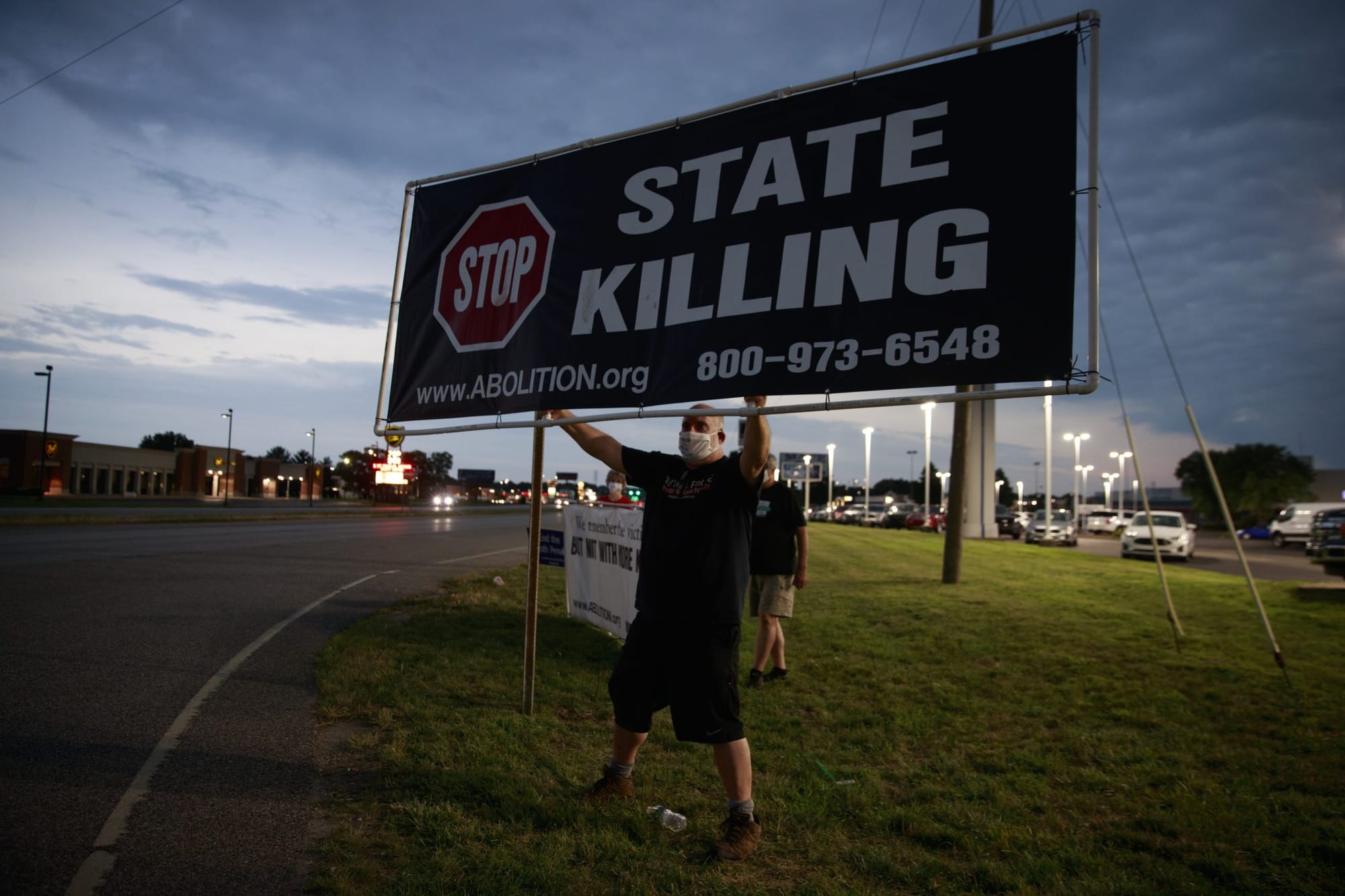
At Riverbend, I met veteran death row protesters like Abe Bonowitz, co-founder of Death Penalty Action. Advocates like Bonowitz are often seen standing vigil outside the prison in a fenced area reserved for those against death row, clearly separated from those in favor of it.
Many death row vigil organizers have spent time with the condemned, whether as educators, pastors, spiritual advisers, or volunteers. For Graham Reside, an ethics professor at the Vanderbilt University Divinity School and executive director of the Cal Turner Program for Moral Leadership in the Professions, some death row inmates are his students.
“I want to talk to the guys on the inside,” Reside said in an interview with The Tennessean. “I’m not saying they’re experts, but they’ve got something to teach me. And so, we’re talking about executing one of our teachers.”
Once volunteers have spent time with those on death row, they realize the person being executed is often not the same person who committed the crime. Some say that executing a rehabilitated person years after the crime occurred is “legalized lynching.” This term holds weight especially when considering Tennessee’s legacy of lynching and racial discrimination. In 2023, Tennessee state Rep. Paul Sherrell even publicly suggested adding “hanging by a tree” to the state’s execution methods.
Riverbend death row vigils usually gather around 30 people, whereas the area reserved for death penalty supporters rarely gather more than two. Andrew Krinks, an author, teacher, and prison volunteer, has attended many vigils prior to and during executions, and described being feet away from looming death as “very powerful.”
“That passage from life to death is so sacred, so tragic, so ultimate,” said Krinks. “Knowing that people are accompanying them, even if only in spirit, can be an affirmation that makes life meaningful one more time before death arrives.”
David Bass, another volunteer, has been participating in these vigils for over 10 years. Bass grew up in conservative southern Alabama and was an “avid supporter of the death penalty” until he was inspired to visit death row inmates by pastor and longtime death penalty abolitionist Joe Ingle. That first visit lasted three hours.
“My life was never to be the same,” he said. One death row inmate, Terry King, became his best friend. According to Bass, he visited King almost 225 times.
“I eventually started to visit Terry every week. Soon, both my daughters were visiting. Terry became a member of our family, even speaking at one of my daughter’s weddings by phone,” Bass said. “In visiting with Terry, it was only natural for me to meet his friends. I got to know many of them well. They became my friends as well.”
Tennessee’s support for the death penalty has only gotten more severe. In the last year, the legislature has added new justifications to execute that don’t include being found guilty of murder. Lee, as well as gubernatorial candidates like Sen. Marsha Blackburn, are all in support of continuing the kinds of executions that have been banned in 23 states.
Bass’s experience is one many of us have witnessed while incarcerated. A volunteer ventures beyond the concrete walls and razor wire and discovers a kinship with those who have been discarded from society, but still have arms stretched wide for redemption and hope. The people inside are not the monsters; they are real human beings who cry, love, and feel. Many carry remorse and sorrow, understand the harm they’ve caused, and pray that the changes they have made can be seen and recognized.
When seen through this lens, how can you still stomach sending someone to a death chamber?
The Right to Write (R2W) project is an editorial initiative where Prism works with incarcerated writers to share their reporting and perspectives across our verticals and coverage areas. Learn more about R2W and how to pitch here.
Editorial Team:
Rikki Li, Lead Editor
Lara Witt, Top Editor
Stephanie Harris, Copy Editor
Tony Vick
Jeff Noland
Filed Under: