Filed Under:
Funding cuts push Philadelphia’s lone rape crisis center into precarity
WOAR serves thousands of sexual assault survivors each year. But after funding from the state lapsed last year, the organization was forced to lay off two-thirds of its staff and pause critical services
Real journalists wrote and edited this (not AI). Independent, community-driven journalism survives because you back it. Donate to sustain Prism’s mission and the humans behind it.
Rose was disheartened by her interactions with detectives at the Philadelphia Police Special Victims Unit (SVU).
It was nearly 4 a.m., almost three hours after she had called the police last spring to report a voyeur who peered into her first-floor apartment. It felt like the male officer who first responded to her 911 call downplayed her sense of fear and violation, Rose said, and she hoped the SVU detectives might be more compassionate.
But they only seemed bored.
After she gave her report at the SVU office in Hunting Park, Rose was left alone while detectives made copies of documents. Meanwhile, in the next room over, an 18-year-old woman was reporting a rape. Rose was shocked to overhear the entirety of the woman’s disclosure: her name, age, address, and the details of her assault. She was even more appalled to hear how the responding lieutenant spoke to the young woman.
“The lieutenant had been very callous with her. She’s literally crying telling her story, trying to phrase it right, and he kept being like, ‘Say it! Say the parts! Say what he did!’ He was kind of barking at her, which was crazy,” recalled Rose, who is only using her middle name for safety reasons.
The woman did not have an advocate with her and she sounded incredibly distressed, she said. When Rose exited a few moments later, she saw the woman’s face through the open door.
“I could see her realize that I had been there,” Rose said. “I feel like she was basically retraumatized. [She’s] in this experience that already sucks, and she has to talk about her experience, and then she saw that I was listening the whole time.”
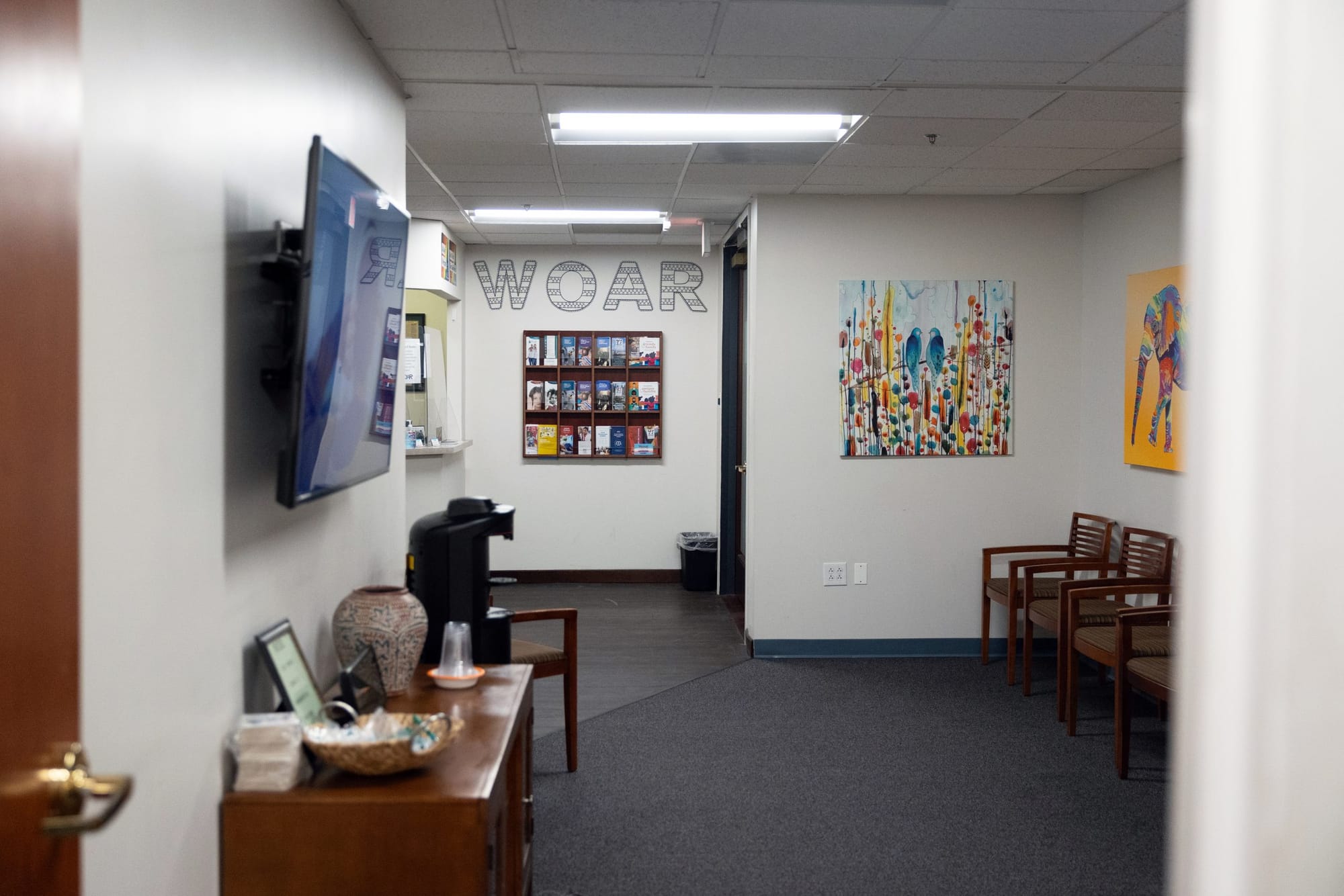
As she left the building, Rose was troubled by what she witnessed: a system that lacked privacy, sensitivity, and trauma-informed care for survivors. Then, on her way out of the SVU office, she noticed a sign for WOAR: Philadelphia Center Against Sexual Violence. The sign gave her a sense of reassurance that someone outside the police department might understand the seriousness of what she encountered with the SVU and would demand accountability for it in a way the police would not. A few hours later, she gave WOAR a call.
For people such as Rose, WOAR serves as a rare beacon of accountability within a system that often fails survivors. Yet, despite the depth and breadth of support the center provides across Philadelphia, WOAR recently faced a crisis of its own—one that threatened the future of their desperately needed services.
A critical organization in crisis
Philadelphia Center Against Sexual Violence—better known as WOAR, an acronym of its former name, Women Organized Against Rape—is the oldest and largest rape crisis center in the state. It is also the sole rape crisis center in Philadelphia, a city of more than 1.5 million residents.
Founded in 1971, the center provides survivors of assault a wide range of free services including therapy, a 24/7 crisis hotline, medical accompaniment, and court advocacy. Additionally, WOAR runs a wide range of community education programs and advocates for legislation that better protects and supports survivors.
At WOAR, survivors of assault can access free trauma-informed counseling through both individual and group therapy sessions: a gamechanger in a city where 20% of residents live below the federal poverty level and 42% rely on Medicaid. Statewide, therapy typically costs between $100 and $250 per session.
WOAR’s hotline also gives survivors access to trained crisis counselors who can provide immediate emotional support, information, and referrals at any hour. These services are free and confidential. In addition, WOAR offers medical accompaniment to support survivors during forensic exams at the Philadelphia Sexual Assault Response Center (PSARC). Survivors pursuing legal action can also receive court accompaniment, with advocates guiding them through proceedings and serving as a steady, familiar presence during overwhelming hearings.
Beyond its survivor resources, WOAR focuses on prevention and education: leading workshops in schools on safe touch and relationship abuse, conducting trainings for police, and testifying before legislators. One of the educational programs they operate is Safe Bars Philly, a bystander intervention program designed to help bar staff recognize and prevent harassment.
Last year, all of these services came under threat.
Each year, Pennsylvania’s government must set the state budget by June 30 before the fiscal year begins on July 1. If a budget is not agreed upon, the state is prohibited from making “many payments” until the period of impasse ends, according to the state’s Office of the Budget. Last year, the budget was at an impasse for 135 days, leaving many Pennsylvania public schools, municipal counties, and nonprofits without funding for almost four months.
As a result, rape crisis centers across the state struggled to remain open. By the time the budget impasse ended Nov. 12, the damage was done. On Oct. 6, 2025, WOAR was forced to lay off about three-quarters of its staff.
WOAR’s annual operating budget is $2.8 million, Anthony told Prism. This funding helps support a vast client base. In 2025, the rape crisis center had 2,325 new clients, took 2,549 hotline calls, provided medical advocacy to 203 people, and provided court accompaniment to 141 people, according to LaQuisha Anthony, WOAR’s acting executive director.
The organization’s operations are incredibly dependent upon the state: 73% of the center’s budget comes from state funding, and—despite inflation—Anthony said there has been no increase in state funding for six years. Consequently, WOAR is operating at a deficit. In 2024, WOAR’s expenses were about $200,000 more than its revenue.
WOAR was not prepared to function without funding for a third of the year.
Due to the budget impasse, the center laid off 22 of its 27 employees last October, according to Anthony. While some of WOAR’s services were able to continue, including the court advocacy program, other programs were cut back or paused indefinitely.
For example, WOAR’s hotline was no longer offered 24/7; calls on weekends and after 5 p.m. on weekdays were redirected to the national Rape, Abuse & Incest National Network crisis line. Educational programs were completely halted. And, most devastating to survivors, WOAR’s therapy programs were only able to accommodate current clients. For those seeking to begin therapy, WOAR was no longer an option.
At the same time the cuts rolled out, WOAR was also undergoing controversial leadership transitions. Indira Henard, who served as the center’s executive director since July 2024, stepped down last September. Gabriella Fontan, an attorney, was named as her replacement just a week before the layoffs took place. Then, without explanation, Fontan stepped down in February.
In the last few months, WOAR has tried to rebuild. Last October, the organization was down to just five employees. As of June 7, they are up to 12. Their medical accompaniment program and portions of their education and restorative justice programs restarted in January. WOAR’s hotline fully resumed in March—at the same time it was once again in search of new leadership.
Into this instability stepped Anthony, a WOAR employee of nine years who inherited an organization in crisis. The center had depleted its staff, greatly altered services, and shaken public trust.
Mounting questions remain about how Philadelphia’s only rape crisis center can rebuild after so much disruption in such a short period of time. It is now Anthony’s job to answer.
“In the thick of it”
Anthony first began as a client of WOAR. She was raped in 2001 when she was a 19-year-old college student. At the time, she had been too afraid to tell anyone what happened. She fell into a deep depression and began to experience suicidal ideation. In 2011, nearly a decade after her assault, she finally felt ready to seek therapy. She turned to WOAR.
“It sounds cliché, but WOAR saved my life,” Anthony said. “It was such a tough time in [that] period of my life. But they allowed me to see, to breathe again. They gave me the tools that I needed.”
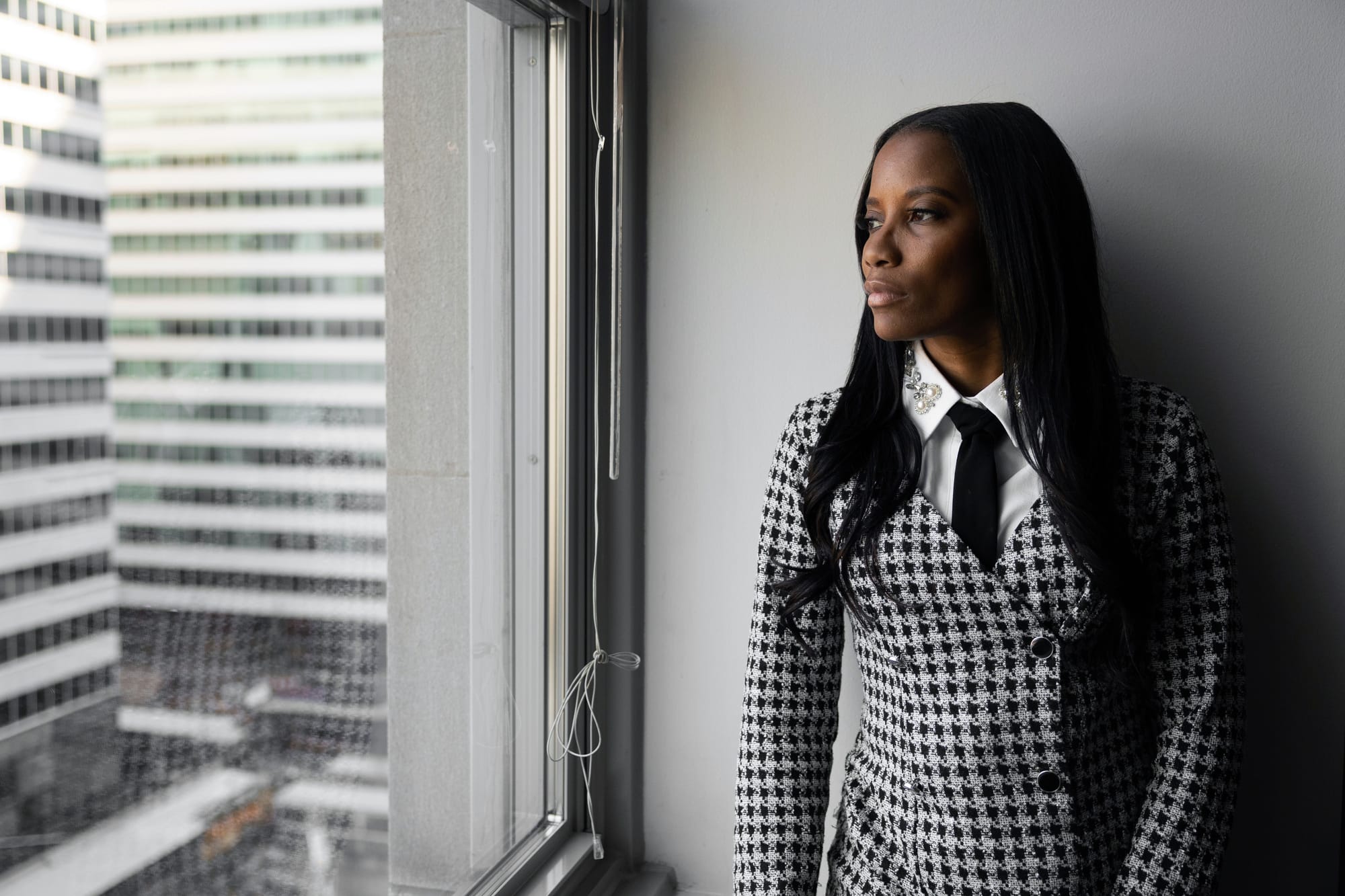
Motivated by how much WOAR helped her, Anthony aspired to help other survivors. She began volunteering at WOAR in 2014. Then, in 2016, she became a full-time employee. She started as a prevention educator, tasked with traveling between Philadelphia public schools and community spaces to teach young people about topics such as safe touch. She later became an advocacy coordinator and then an advocacy manager. In these roles, she used her own story to advocate for legislation that would better protect survivors. In 2019, thanks to a collaboration between WOAR and several other organizations in the state, the statute of limitations for child sexual abuse in Pennsylvania expanded. The new law allows survivors to pursue legal action until age 55. Anthony’s testimony before state lawmakers was key to the amendment passing.
While Anthony did not anticipate her newest transition to acting executive director, others in WOAR’s network applauded the change.
“I have known LaQuisha since she was a client of WOAR. I watched her speak for the very first time at a WOAR event. I watched her hands shake and listened to her voice shake. And I watched her grow into this powerhouse of an advocate,” said Robin Strough, who left the organization in 2023 after volunteering for 13 years. “She is exactly what WOAR needs. WOAR needs somebody that is in the thick of it. And there is no one that is in the thick of it more than LaQuisha Anthony.”
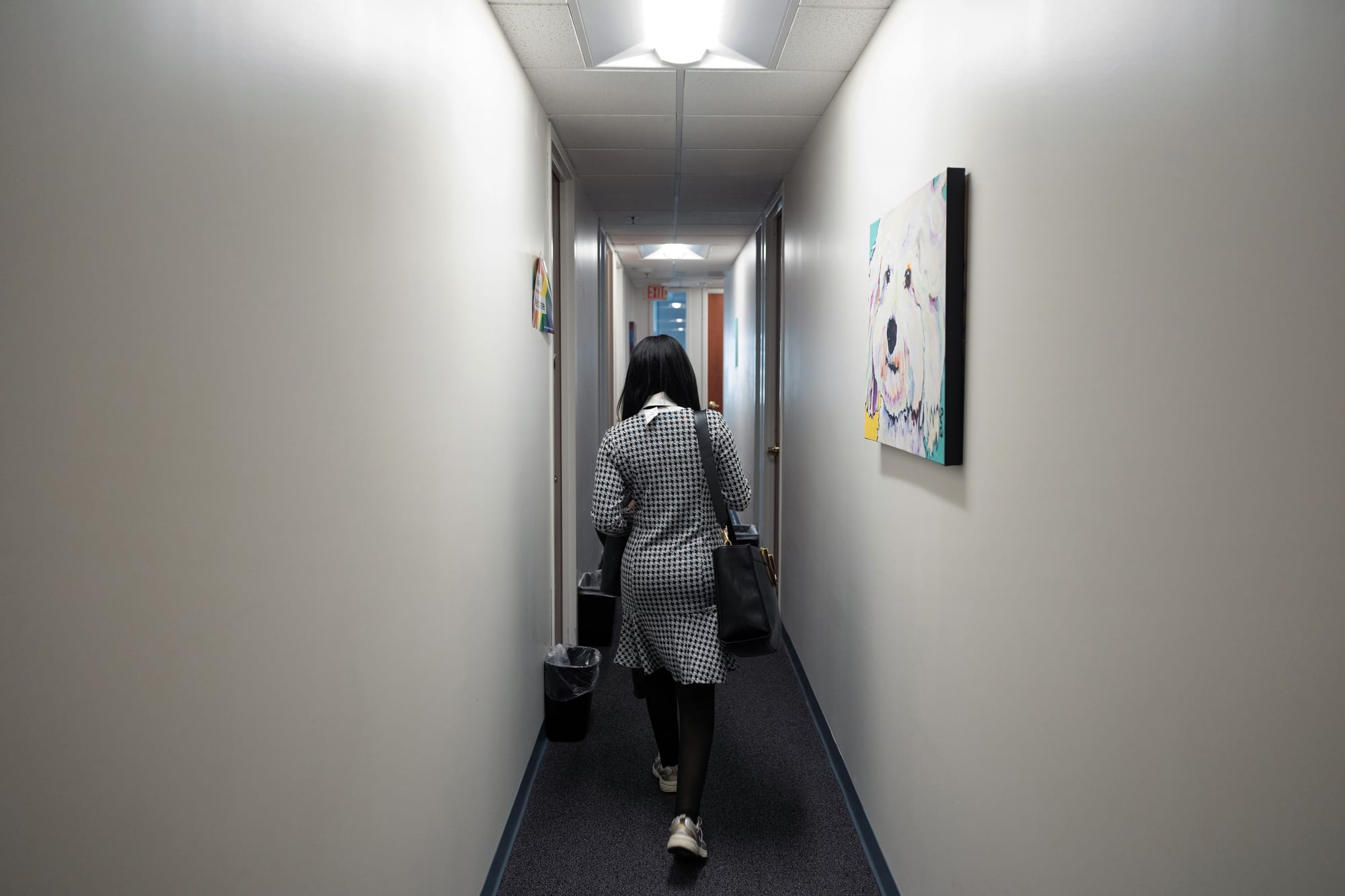
Sexual assault is on the rise in Philadelphia. In 2025, 237 rapes were reported in the city; in 2026 so far, 263 have already been reported—an increase of almost 11%.Rape remains one of the most underreported crimes, with studies showing less than one-third of sexual assaults are reported to police. Nationally, nearly half of women and more than 1 in 6 men experience some form of sexual violence in their lifetimes. Yet, despite the devastating prevalence of sexual assault, many survivors are left feeling isolated, disbelieved, and hopeless.
ZP was raped by a man she’d been dating in 2022. She didn’t know what to do.
“If I called the cops, [they] would have laughed at me,” said ZP, who is only using her initials for safety reasons. “My nervous system just dropped to below zero. I was not functioning. I couldn’t go to work. I was numb and immobile at the same time.”
A friend told her about WOAR, and ZP quickly sought out the organization’s emergency services.
She first called their crisis hotline and filled out intake forms to enroll in therapy. The hotline volunteer she connected with was sensitive and understanding, she said. They informed her that WOAR had a waitlist that could take several months because of the overwhelming demand for free counseling. Weeks passed as ZP moved through life on autopilot. Then, a month and a half later, WOAR called and connected her with a counselor.
To assess her symptoms, ZP’s counselor conducted an Impact of Event Scale-Revised (IES-R) evaluation, a tool used to measure the severity of post-traumatic stress disorder symptoms. Out of a total possible score of 88, ZP scored a 63. Over the next year, ZP met weekly for hourlong counseling sessions; she described the experience as “life-changing.”
“[My therapist] felt like someone who understood. And for people who are just assaulted, I feel like what we want to hear is that you’re seen: ‘I’m not going anywhere because you are hurt. And your hurt doesn’t scare me.’ So the fact that she was not just unmoved, but able to move through it with me—I’ll never be able to find a therapist like that again ever,” she said. During their last session together a year later, ZP answered the IES-R evaluation questions again. This time, her score was a 7.
[WOAR] has no idea how much they can do for someone like me who just didn’t even know where to start. … When I met my therapist, I was half alive. … She’s the reason I am still alive today. She’s the reason that I’m able to be happy.
ZP, client of WOAR
“That organization has no idea how much they can do for someone like me who just didn’t even know where to start,” said ZP. “I literally was drinking myself to death, just coping in all of the ways that we think are normal. And when I met my therapist, I was half alive. … She’s the reason I am still alive today. She’s the reason that I’m able to be happy.”
While counseling and crisis support are at the core of WOAR’s work, the center also plays a critical role in aiding survivors who want to report their assaults to law enforcement.
An advocate from WOAR is present five days a week in courtrooms reserved for child sexual abuse cases. There are also advocates present in courtrooms for adult sexual abuse cases on Wednesdays, the only day of the week that such cases are prosecuted in Philadelphia, according to Katrina Wadas, supervising attorney of the Family Violence and Sexual Assault Unit at the Philadelphia District Attorney’s Office (DAO) . The organization’s court accompaniment program is an invaluable support, not just for survivors, but also for the DAO.
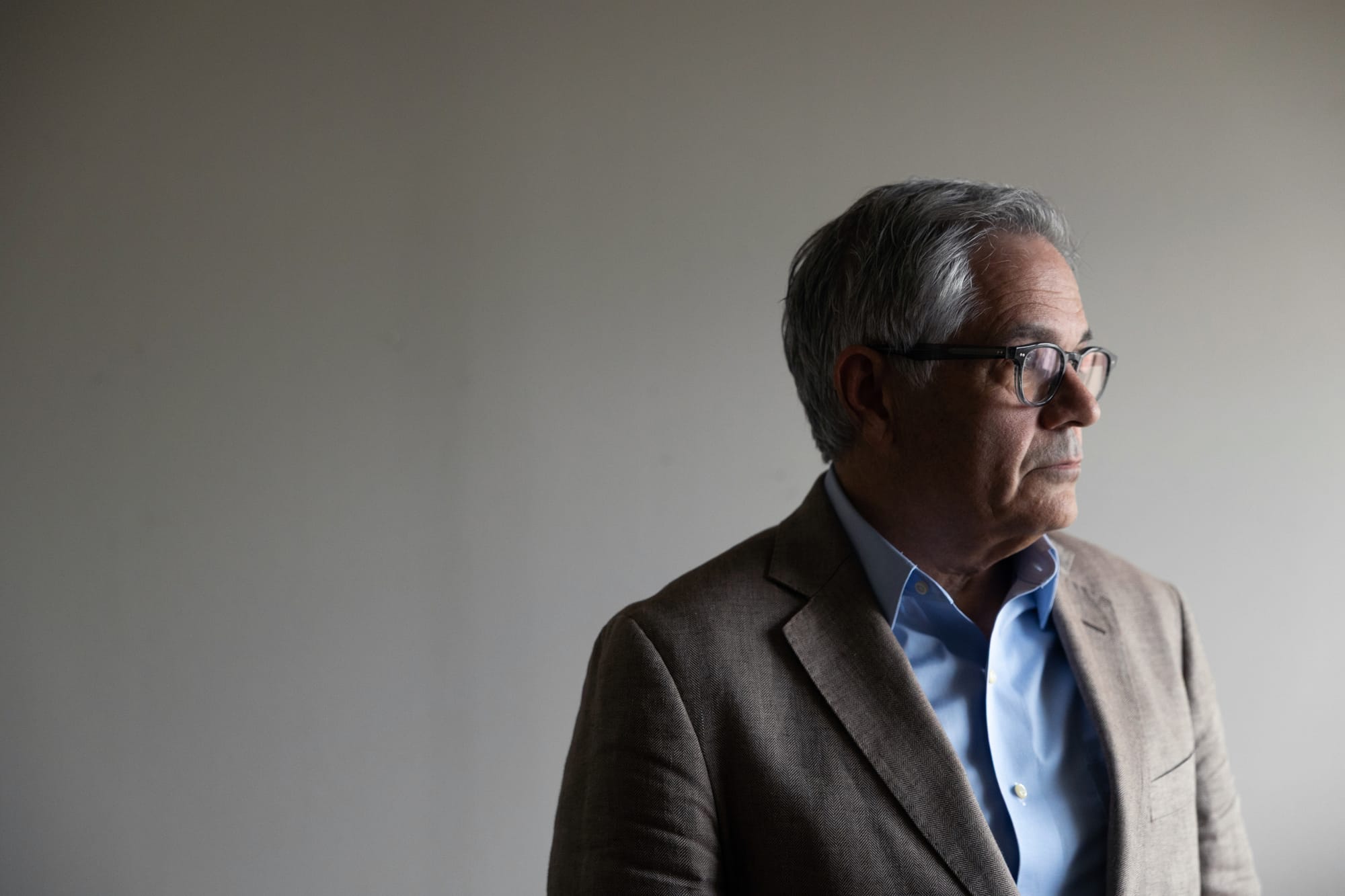
Last October, when the DAO was informed about WOAR’s funding struggles, the office stepped in to help, offering the center $90,000 in unrestricted funding. District Attorney Larry Krasner feared the consequences if the rape crisis center was forced to shutter.
“The immediate impact is less reporting, less successful prosecution, less healing,” Krasner said, arguing that survivors are more likely to come forward when the process of reporting and prosecution feels tolerable. In turn, increased reporting can lead to greater accountability and deterrence. “It’s an essential aspect to the whole thing,” he said.
Sexual assault often occurs behind closed doors, making survivor testimony critical in many rape prosecutions. According to Wadas, WOAR advocates can make an enormous difference in helping survivors feel prepared to testify.
“To have somebody in the room who is truly there for the victim and the victim’s best interest alone really does make a difference in terms of them feeling supported to take the stand,” she explained.
Even with the DAO emergency contribution, Krasner acknowledged that WOAR’s funding crisis exposed the organization’s extreme vulnerability. “They provide a ton of support; they need a ton of support,” he told Prism. “There’s no question that, if you’re improperly funded, there are going to be challenges and there are going to be gaps. My point is not to dwell on that; my point is to fund it. The work they do is absolutely essential for justice, for prevention, for accountability. We’ve got to make sure they do it.”
The work [WOAR does] is absolutely essential for justice, for prevention, for accountability. We’ve got to make sure they do it.
Larry Krasner, Philadelphia district Attorney
But WOAR’s challenges extend beyond its funding shortfalls. Like many nonprofits, the organization has recently struggled to retain employees in a field that is rife with emotional exhaustion, heavy caseloads, and relatively low pay.
The rape crisis center did not always have such high turnover. When Carole Johnson retired from her position as WOAR’s executive director in 2016, she was in the role for more than two decades. Her predecessor, Monique Howard, remained executive director for seven years. Since Howard stepped down in 2022, the organization has struggled to retain leadership. In just four years, WOAR has cycled through five different executive directors. Strough, the WOAR volunteer for 13 years, said the instability is tied to the intense demands of the position and low compensation.
“It’s such a demanding, emotional, hard job,” Strough said. “When you don’t pay people enough, they move on to better-paying jobs.”
The counselors employed by WOAR face similar challenges. The job sites Indeed and Glassdoor report that counselors at WOAR earn roughly $56,000 annually—well below Philadelphia’s median individual earnings of approximately $60,500. The salary, of course, also does not account for the significant secondhand trauma that counselors absorb while supporting survivors through the aftermath of rape.
Anthony told Prism that increased funding could help WOAR better support and retain its staff.
“Right now, we are a nonprofit that has high-level clinicians, and we’re not paying them at top dollar based off of the nonprofit rate, but we would love to do that,” Anthony said. “We also would love to be able to … not have a waitlist [for our therapy], which requires us to have a full staff of clinicians and therapists.”
Strough said she watched the organization’s instability affect its volunteer base.
“I saw a major decline [in volunteers] at the end of my term,” she recalled. “We used to have a calendar that we would sign up on for shifts, and [recently] it was just always the same four or five people signing up all the time. It was like, What happened to everybody? Where did everybody go?”
According to Strough, the volunteer program weakened, in part, because the staff members overseeing it also constantly changed. She asserted that if WOAR’s volunteer roster remained as large and active as it once was, the organization may have been better equipped to survive the budget impasse without layoffs.
Anthony, for her part, wants more WOAR volunteers. However, the onboarding process is time intensive. Volunteers must go through 40 hours of training and, with limited staff in place, it’s been harder for the center to train people over the last few months, Anthony said. WOAR’s next volunteer training is set to open in August.
“We really had a strong base, and somewhere along the line it kind of fell apart. So I just pray and hope that under the new leadership that they’re going to come back stronger than ever,” Strough said.
“It’s the only place for them to go”
For survivors such as Loren, who is only using her middle name for fear of retaliation, WOAR’s survival is deeply personal.
Loren sought out therapy at WOAR when she was 18 years old. She was assaulted four years prior, and she found it difficult to manage school and young adulthood in the face of such immense trauma.
“There were some really dark moments I had where it was like, Alright, I can’t take this, enough is enough. I just needed this pain to go away. … It’s kind of hard to catch [your] breath,” she remembered.
Loren decided to seek help when she became a young mom. She realized that in order to be a better parent for her child, she needed to address her lingering trauma.
But she couldn’t afford therapy.
“I was such a young parent. I was a stay-at-home mom. I was 18, trying to navigate life. And I really didn’t have anything to contribute financially. Although I had [some] money, I just didn’t feel like I could prioritize that,” Loren said.
WOAR’s free therapy was a gamechanger. “After struggling for so long, it was such a relief. … With WOAR, I mattered. And I was allowed to be heard and seen, and I was allowed to grieve and be angry,” she said.
Now 29, Loren’s life is completely changed by her experience with WOAR. She was so moved by the counselors and volunteers who helped her that she wanted to be a similar source of support for sexual assault survivors. She took a job in law enforcement and now works in Kensington as the responding officer for sexual assaults in the neighborhood. She frequently recommended WOAR as a resource to survivors she encountered on the job. However, now that WOAR is no longer accepting new therapy clients, she is unsure where to direct people.
“I wish that I could give everybody the level of care that I had,” she said. “The wait time is just so long. When you’re traumatized, you need help now.”
For 55 years, WOAR has been the place thousands of Philadelphians turned after experiencing sexual violence. The rape crisis center provided far more than counseling and court accompaniment. For many survivors, it offered the first sense of hope in the wake of extreme trauma and devastation.
As Strough explained, police officers, doctors, and prosecutors often need survivors to repeatedly recount the details of their assaults, which is retraumatizing. WOAR advocates served a different role. “Here’s someone that’s interested in: How am I feeling? How am I handling it? How am I doing? That’s the difference,” Strough said.
The organization’s services were not just helpful; they were essential. “The words, ‘You do not need insurance,’ makes all the difference,” said Strough. “It’s the only place in the city. It’s the only place for them to go.”
But since WOAR has been unable to accept any new therapy patients since October, survivors in the city are facing a different reality—and that weighs heavily on Anthony.
Anthony knows firsthand how helpful WOAR’s services are after experiencing sexual violence herself. “WOAR saved my life,” she reiterated. “If it was not for WOAR, I would not be able to sit here alive, breathing, talking to you.” Today, she said, that experience shapes the way she leads the organization during one of the most difficult periods in its history.
She is not shying away from the challenge.
Even amid layoffs, staffing shortages, and uncertainty about funding, Anthony said WOAR’s remaining employees continue showing up because they understand what is at stake. “Sexual violence is happening every day … and we want to ensure that no survivor is without the care [and] trauma-informed support that they need to regain their voice and their sense of self after a traumatic experience like that,” Anthony said.
She is doing everything she can to bring the rape crisis center back to its full capacity. In January, Anthony shuffled staff and volunteers around so that WOAR’s medical accompaniment program could fully reopen. In March, the hotline resumed its 24/7 hours. And, in order to reduce the extensive therapy waitlist, she brought back the center’s previously discontinued SAGE program, a 12-week therapy program that functions as a bridge between the short-term hotline and long-term counseling. Resuming long-term counseling remains the ultimate goal, but Anthony said the SAGE program is a step in the right direction.
As reports of sexual assault continue to rise in Philadelphia, the future of WOAR remains uncertain. The hotline still answers calls. Advocates still accompany victims to hospitals and courtrooms. But, months after the layoffs, the center is still unable to take on new therapy clients—a reminder that even as the organization stabilizes, one of Philadelphia’s most important forms of support for survivors remains in jeopardy.
Editorial Team:
Tina Vasquez, Lead Editor
Lara Witt, Top Editor
Rashmee Kumar, Copy Editor
Rachel Wisniewski
Filed Under: