RFK Jr.’s dangerous rhetoric about mental health medication will hurt those who need it most, experts say
HHS Secretary Robert F. Kennedy Jr. has used racist dog whistles to target the “overprescribing” of antidepressants. The real problem is a lack of access to comprehensive mental healthcare, especially for Black Americans, mental health professionals say
Laura Weiss
Real journalists wrote and edited this (not AI). Independent, community-driven journalism survives because you back it. Donate to sustain Prism’s mission and the humans behind it.
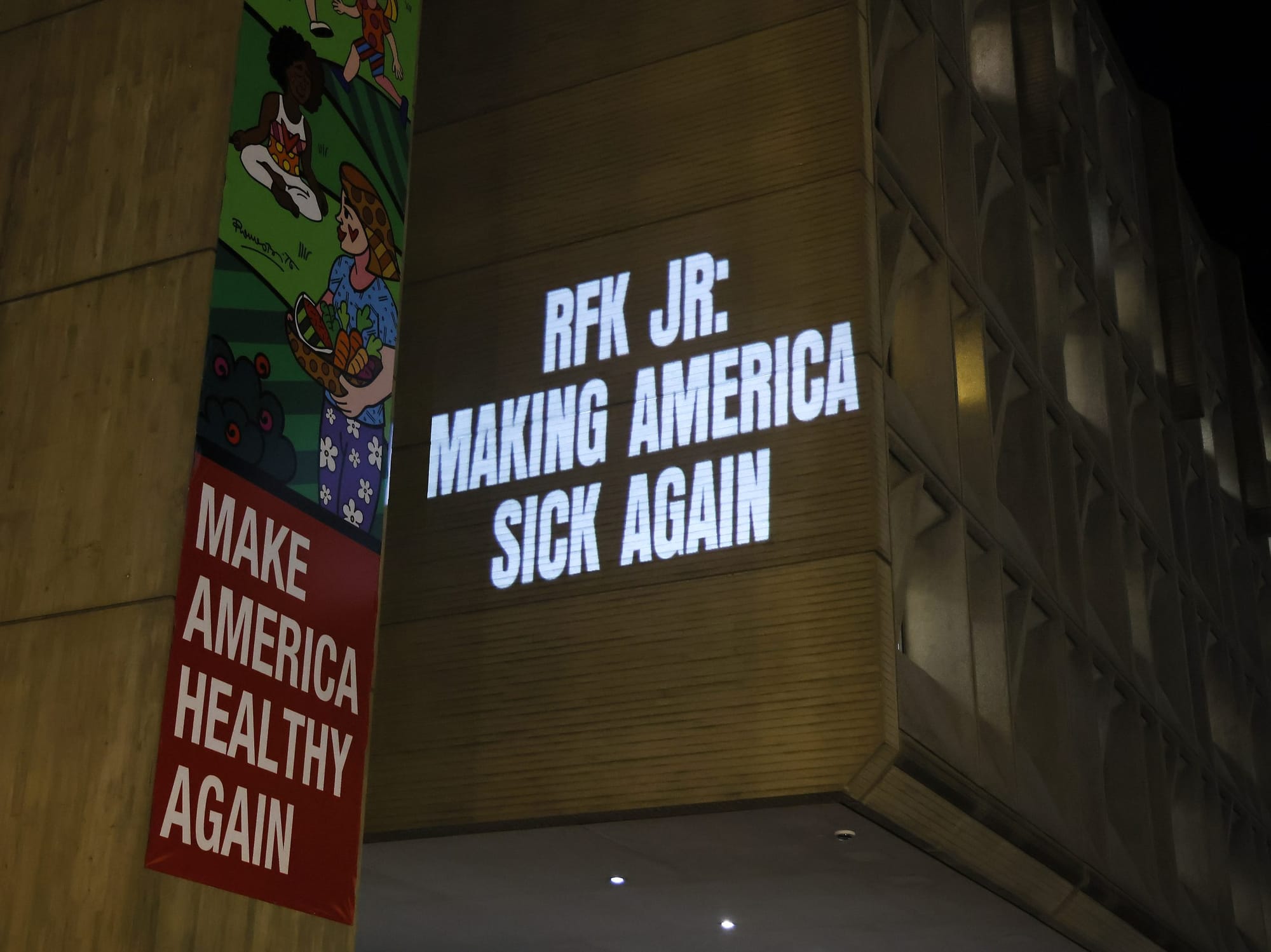
As part of his Make America Healthy Again (MAHA) movement, Department of Health and Human Services (HHS) Secretary Robert F. Kennedy Jr. has overseen massive cuts to healthcare coverage and funding, health and science research, and agency staff. In addition to his efforts to cast doubt upon and restrict access to life-saving vaccines, Kennedy is also targeting psychiatric medications.
His Make America Healthy Again Commission, established in February 2025 shortly after his confirmation, made clear its promise to “assess the prevalence of and threat posed by the prescription of selective serotonin reuptake inhibitors.” Selective serotonin reuptake inhibitors, or SSRIs, generally target anxiety and moderate to severe depression, and include medications such as Prozac (fluoxetine), Lexapro (escitalopram), and Zoloft (sertraline). Around 16% of U.S. adults take antidepressant medication.
Last summer, Kennedy held a hearing sowing doubt about the safety of these medications in pregnancy, and in May announced a plan to “curb psychiatric overprescribing,” according to a press release from HHS.
The administration also released a “Dear Colleague” letter in May, addressed to medical providers to “emphasize the importance of ensuring that treatment planning for mental health conditions includes meaningful access to evidence-based non-pharmacological interventions,” stating that “alternatives [to medication] should be discussed.” The letter also outlines how medical providers can correctly bill insurance for discussions with patients about deprescribing.
SSRIs have been safely used for years and can be “lifesaving,” said Dr. Eric Rafla-Yuan, a psychiatrist and chair of the Committee to Protect Public Mental Health, a consortium of psychiatrists convened in early 2025 in response to the threats of Kennedy’s HHS to patients.
Yet Kennedy has falsely claimed antidepressants induce homicidal ideation and are more addictive than heroin. This is “horrendously inaccurate misinformation,” according to Rafla-Yuan.
While Kennedy’s effort to curb antidepressant use is couched in language that sounds reasonable, it is a “Trojan horse” for his true aims, Rafla-Yuan said.
HHS seems to be saying that “overprescribing, by very definition, is bad,” Rafla-Yuan said. “‘How could anybody be against overprescribing?’ And then really what’s behind it is this crosscutting agenda to strip away access to care for millions of families.”
Disproportionate impact on Black children
Kennedy has specifically targeted Black children in his comments. In a 2024 podcast episode he said, “Every Black kid is now just standard put on Adderall, SSRIs, benzos, which are known to induce violence,” a claim he later denied. He has also suggested these children be “reparented” on “wellness farms,” a suggestion with disturbing roots in eugenics and slavery.
To the contrary, Black and Hispanic Americans often have the most difficulty accessing the treatment they need, and seek mental health treatment at much lower rates than their white counterparts. For example, studies have found that Black children were actually 70% less likely to receive an attention deficit hyperactivity disorder diagnosis than white children.
According to Rafla-Yuan, these racial and socioeconomic disparities will likely only grow in the context of the historic cuts to Medicaid, health and science research, and other social supports such as food stamps, under the current administration.
Taking away medicine that improves the quality of life for individuals suffering from an array of mental health challenges, primarily those from marginalized backgrounds, is a form of structural violence.
Eboni Wooley
Eboni Wooley, a psychotherapist, doctor of social work, and lecturer at New York University, has written about how only 2% of psychiatrists being Black contributes to the lack of appropriate psychiatric care for Black patients. Despite high rates of mental illness and post-traumatic stress disorder, Black Americans are more likely to distrust the medical system due to racist histories like the Tuskegee syphilis experiment, and often face discrimination and increased stigma.
“Taking away medicine that improves the quality of life for individuals suffering from an array of mental health challenges, primarily those from marginalized backgrounds, is a form of structural violence,” Wooley told Prism in a written statement. “You are stripping away medication that many individuals need to meet their basic needs.”
A need for more comprehensive mental health care
The Committee to Protect Public Mental Health released a guide responding to mental health misinformation, stating, “Access, not excess, is the true crisis. Framing the problem as ‘over-medication’ distracts from the real issue—35% of adults and 50% of children and teenagers who needed mental health care report not being able to access it.”
According to Dr. Lauren Osborne, vice chair of clinical research at the Obstetrics and Gynecology Department at Weill Cornell Medicine and chair of the National Curriculum in Reproductive Psychiatry, Kennedy’s effort oversimplifies a nuanced situation, and unfairly stigmatizes antidepressants and people with mental health conditions.
“I definitely think there are people out there who are on antidepressants who perhaps don’t need to be, but I don’t think that that’s a failure of antidepressants,” she said. “I think it’s a failure of our medical system to keep people in care and to keep people seeing mental health professionals throughout their lives.”
The larger issue, Osborne said, is continued access to mental health care providers and availability of other mental health care services, which Kennedy has not addressed. “If you want to take away one tool, which is medication, you’re going to have to increase the ability of people to access other kinds of treatments, and I haven’t seen anything about that in RFK’s rhetoric,” she said.
In her practice, Osborne said she follows clinical guidelines that combine medication use with non-pharmalogical interventions such as exercise, mindfulness, and healthy food, in patients experiencing depression and anxiety. Patients who have only experienced one to two depressive episodes may only need to take SSRIs on a temporary basis, while patients who have experienced three or more episodes of moderate to severe depression are likely to need antidepressants long term, she said.
“This is a disease of the brain, just like cardiomyopathy is a disease of the heart,” Osborne said. The actions and comments Kennedy and his allies have made reflect a “fundamental misunderstanding of what psychiatric illness is.”
Stigmatizing use of psychiatric medication can have serious consequences. According to reporting by Beth Mole in Ars Technica, “A 2024 study in Health Affairs found that the wording and media amplification of a safety warning about antidepressants from the Food and Drug Administration in 2003 may have led to thousands of deaths.”
According to a late May survey by the Committee to Protect Public Mental Health, some 94% of psychiatrists disagree with the statement that Kennedy’s policies have benefited the field.
Osborne noted that some people go on psychiatric medication when other mental health services, such as counseling, are not available to them, including to people who have commercial insurance. Despite patient protection laws, insurance coverage for therapy is patchwork at best, and therapists are often being reimbursed by insurance at much lower rates than other specialties. According to Osborne, this is a major barrier to mental health care. In fact, over a third of psychologists are not in-network with any insurance, according to the American Psychological Association.
“Until we acknowledge that the work that psychiatrists do is worth just as much as the work that other medical professionals do, we’re not going to get to the point where we have medical health professionals taking the same wide range of insurance that other health professionals are,” Osborne said.
While Kennedy’s rhetoric on antidepressants has yet to legally restrict them, his MAHA agenda is having ripple effects in the doctor’s office. Osborne has observed that some of her patients, who are mostly pregnant or perinatal, have expressed more concern about how difficult it may be to stop the use of antidepressants, though Osborne said she always works carefully with patients to reduce the possibility of discontinuation effects.
She is also encountering misinformation about the relative safety of “natural” treatments, which she attributed to the MAHA movement.
“Some of my patients are, for example, very willing to use cannabis during pregnancy, even though we have a lot of information about the risks of that to the fetus … because it’s natural, and they’re not willing to take my FDA-regulated medication because it’s not natural,” Osborne said.
The administration is peddling dangerous misinformation about drug safety and efficacy, while worsening “social determinants of health,” Rafla-Yuan said. These include access to clean water, nutritious food, quality education, livable wages, and a safe living environment or neighborhood, he said.
“We need all of these, not just medication or therapy, to really support healthy and thriving communities,” Rafla-Yuan said.
Editorial Team:
Sahar Fatima, Lead Editor
Lara Witt, Top Editor
Stephanie Harris, Copy Editor
Laura Weiss